
250+ Happiness Similes
Happiness is one of those feelings that is easy to feel but hard to describe in words, and that is exactly where similes come to the rescue. A simile is a figure of speech that compares two different things using “like” or “as,” helping writers turn an abstract emotion into something readers can see, touch, and almost feel in their own chest. Figurative language matters because plain statements like “she was happy” rarely leave a lasting impression, while a vivid comparison can make that same feeling unforgettable. Nature, in particular, offers some of the richest material for these comparisons, and trees are among its most powerful symbols.
A tree stands tall through storms, which is why writers often link it to strength and resilience. It grows slowly and steadily, which makes it a natural symbol of patience, wisdom, and quiet emotional depth. When happiness is compared to something rooted in nature, like a blooming tree or sunlight breaking through branches, the emotion feels grounded, alive, and deeply human. This article brings together fifteen original happiness similes, many inspired by nature, to help you write with more clarity, imagery, and heart.
What Is a Simile?
A simile is a figure of speech that compares two unlike things using the words “like” or “as” to highlight a shared quality between them. Unlike a plain description, a simile paints a picture in the reader’s mind, making emotions and ideas easier to visualize and feel. For example, saying “her happiness was like sunshine after weeks of rain” instantly communicates relief, warmth, and joy without needing extra explanation. This is the essence of similes in literature: they take something intangible and anchor it to an image the reader already understands.
1. Happy as a Sunflower Turning Toward the Light
Meaning:
This simile describes a happiness that is open, hopeful, and naturally drawn toward positivity, much like a sunflower that always faces the sun.
Usage insight:
It works best when describing someone with an optimistic personality or a moment when a person’s mood visibly brightens in response to good news. It’s especially useful in descriptive writing where you want to show emotional change rather than just state it.
Example sentences:
- After she got the acceptance letter, she was happy as a sunflower turning toward the light, her whole face lifting with new hope.
- Even on difficult days, he stayed happy as a sunflower turning toward the light, always searching for something good.
2. Joyful Like a Stream Finding Its Way to the Sea
Meaning:
This comparison captures a gentle, continuous happiness that flows steadily rather than arriving all at once.
Usage insight:
It suits reflective or poetic writing, especially when describing contentment that builds gradually over time, such as personal growth or a peaceful life transition.
Example sentences:
- Her contentment felt joyful like a stream finding its way to the sea, unhurried but always moving forward.
- Retirement brought him a joy like a stream finding its way to the sea, calm, patient, and sure of its direction.
3. Happy as a Child Chasing Butterflies in Summer
Meaning:
This simile represents pure, carefree happiness, free from worry or complication.
Usage insight:
It is ideal for describing innocent joy, such as a moment of playfulness or a brief escape from adult responsibilities, and works especially well in warm, nostalgic storytelling.
Example sentences:
- On their first day of vacation, they were happy as a child chasing butterflies in summer, laughing at nothing in particular.
- Watching the puppies play made her happy as a child chasing butterflies in summer, all her stress melting away.
4. Glowing Like a Lantern in the Dark
Meaning:
This simile describes happiness that shines through even in difficult circumstances, offering warmth to those around it.
Usage insight:
Use this when a character’s joy stands out against a gloomy or challenging backdrop, making it a strong choice for emotional turning points in stories or essays.
Example sentences:
- Despite the hospital’s quiet sadness, her smile was glowing like a lantern in the dark, comforting everyone nearby.
- His optimism kept glowing like a lantern in the dark throughout the toughest year of his career.
5. Happy as a Tree Blooming After a Long Winter
Meaning:
This nature-inspired simile reflects the joy that follows a period of hardship, showing renewal, resilience, and growth.
Usage insight:
It is perfect for describing emotional recovery, personal transformation, or hope after a hard chapter in life, making it a favorite in memoirs and reflective essays.
Example sentences:
- After months of grief, she finally felt happy as a tree blooming after a long winter, colorful and alive again.
- The team’s confidence returned, happy as a tree blooming after a long winter, following their difficult losing streak.
6. Cheerful as Birdsong at Dawn
Meaning:
This simile suggests a fresh, energetic happiness that feels natural and effortless, like the first sounds of morning.
Usage insight:
It works well when describing someone who brings positive energy into a room or starts their day with enthusiasm, making it useful in character introductions.
Example sentences:
- She walked into the office cheerful as birdsong at dawn, instantly lifting everyone’s mood.
- His voice on the phone was cheerful as birdsong at dawn, even though it was barely six in the morning.
7. Happy as Waves Meeting the Shore

Meaning:
This comparison captures a happiness that feels rhythmic and inevitable, arriving again and again like ocean waves.
Usage insight:
It suits descriptions of recurring joy, such as happiness found in familiar routines, relationships, or traditions that bring comfort over time.
Example sentences:
- Every family reunion left her happy as waves meeting the shore, comforted by the same familiar faces year after year.
- Coming home after a long trip always made him happy as waves meeting the shore, content and completely at peace.
8. Radiant as a Field of Wildflowers in Bloom
Meaning:
This simile describes a happiness that is vibrant, abundant, and impossible to ignore, much like a field bursting with color.
Usage insight:
Best used for describing overwhelming joy or a joyful atmosphere, such as at a celebration, wedding, or moment of collective happiness.
Example sentences:
- The wedding hall felt radiant as a field of wildflowers in bloom, full of laughter and color.
- Her excitement was radiant as a field of wildflowers in bloom when she announced the good news.
9. Happy as a Kite Riding the Wind
Meaning:
This simile reflects a light, free-spirited happiness, one that feels uplifted and unburdened.
Usage insight:
It works particularly well for describing moments of freedom, such as finishing a stressful project or stepping into a new adventure, and adds a playful tone to creative writing.
Example sentences:
- Once the exams were over, the students felt happy as a kite riding the wind, carefree for the first time in months.
- She danced through the airport, happy as a kite riding the wind, finally starting her long-awaited journey.
10. Bright as Morning Dew on Green Leaves
Meaning:
This simile represents a happiness that feels fresh, delicate, and quietly beautiful.
Usage insight:
Use it for subtle, understated joy rather than loud celebration, making it effective in poetry or gentle, reflective prose where softer emotions need highlighting.
Example sentences:
- Her smile was bright as morning dew on green leaves, small but full of genuine warmth.
- Their reunion brought a happiness bright as morning dew on green leaves, quiet yet deeply felt.
11. Happy as a Puppy Greeting Its Owner
Meaning:
This comparison shows an enthusiastic, unfiltered happiness expressed without hesitation or restraint.
Usage insight:
This works well in lighthearted or humorous writing, especially when describing excitement that is a little over-the-top but endearing.
Example sentences:
- He was happy as a puppy greeting its owner when his best friend surprised him at the airport.
- The kids were happy as a puppy greeting its owner the moment they saw the ice cream truck.
12. Content as an Old Oak Standing in Its Roots
Meaning:
This nature simile represents a deep, settled happiness built on stability, patience, and self-assurance.
Usage insight:
It is especially fitting for describing older characters, long-term relationships, or a sense of peace that comes from having lived through many seasons of life.
Example sentences:
- After decades of hard work, he felt content as an old oak standing in its roots, proud of the life he had built.
- Their marriage had grown content as an old oak standing in its roots, steady through every storm.
13. Happy as Fireflies Lighting Up a Summer Night
Meaning:
This simile captures a magical, almost enchanting happiness, one that feels special and a little rare.
Usage insight:
Use it for moments that feel dreamlike or unforgettable, such as a first date, a surprise celebration, or a cherished childhood memory, especially in descriptive or romantic writing.
Example sentences:
- Their laughter filled the backyard, happy as fireflies lighting up a summer night.
- The whole town felt happy as fireflies lighting up a summer night during the annual festival.
14. Warm as Sunlight Filtering Through Forest Branches
Meaning:
This simile reflects a gentle, comforting happiness that feels nurturing rather than overwhelming.
Usage insight:
It is ideal for describing emotional comfort found in relationships, home, or nature itself, and adds a calming tone to descriptive passages.
Example sentences:
- Being back in her childhood home felt warm as sunlight filtering through forest branches.
- His words of encouragement were warm as sunlight filtering through forest branches, exactly what she needed to hear.
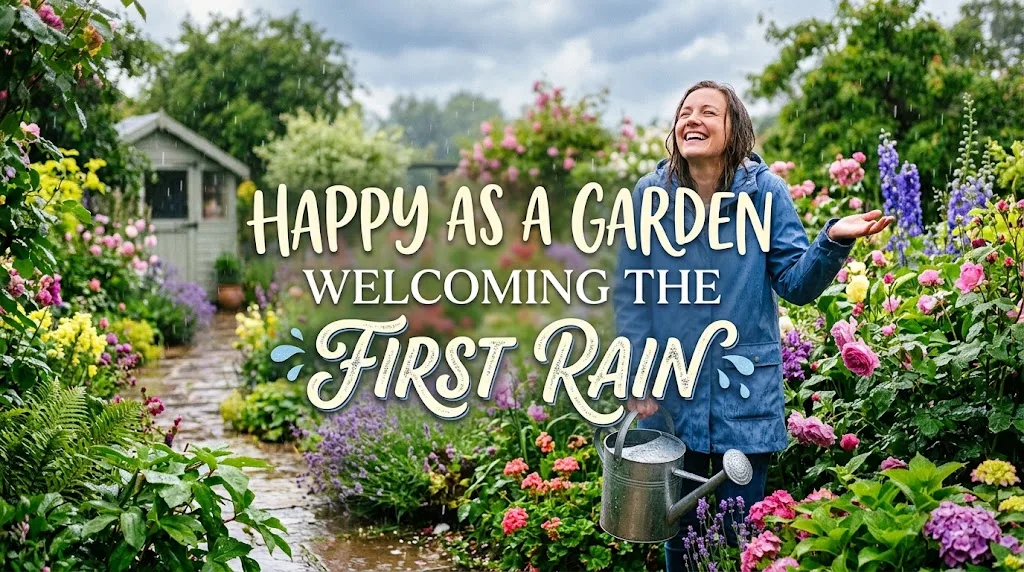
15. Happy as a Garden Welcoming the First Rain
Meaning:
This simile represents relief mixed with joy, the kind of happiness that comes after waiting for something needed.
Usage insight:
It works well for describing long-awaited good news or emotional release after a period of struggle, making it a strong closing image in essays or stories.
Example sentences:
- When the test results came back clear, she was happy as a garden welcoming the first rain.
- The whole village felt happy as a garden welcoming the first rain after months of drought.
How to Use Similes Effectively in Writing
Similes can elevate almost any type of writing, but they work best when used with intention rather than overused for decoration. For creative descriptions in general, aim for freshness. Familiar or overused similes can weaken your writing, so consider drawing from nature, everyday life, or personal experience to create comparisons that feel original and honest. Finally, always ask whether the simile adds clarity or simply adds words. If it doesn’t strengthen the meaning or emotion, it’s better to leave it out.
FAQs
1. What are happiness similes?
Happiness similes are figures of speech that compare the feeling of happiness to something else, usually using “like” or “as,” to make the emotion more vivid and relatable for readers.
2. What is the difference between a simile and a metaphor?
A simile compares two things using “like” or “as,” such as “happy as a sunflower,” while a metaphor states that one thing is another without those words, such as “she was sunshine.” Both create imagery, but similes are more direct comparisons, while metaphors imply a stronger identity between the two things.
3. Why do writers often use nature in similes?
Nature offers universally recognizable images, such as trees, sunlight, rivers, and flowers, which makes comparisons easier to understand and emotionally resonant across different readers and cultures.
4. Can similes be used in academic writing?
Yes, though sparingly. In academic writing, similes should be used to clarify a complex idea rather than to add decorative language, and they should always maintain a formal and precise tone.
5. How can I create my own original similes?
Start by identifying the core feeling or idea you want to express, then think of an image from nature, daily life, or personal memory that shares a similar quality. The more specific and sensory the image, the more effective the simile will be.
Conclusion
Happiness similes do more than describe an emotion, they help readers feel it. By connecting joy to sunflowers, streams, blooming trees, and morning light, writers give happiness a shape, a texture, and a memory readers can hold onto. Similes remind us that language is not just about naming feelings but about painting them vividly enough that someone else can recognize the same warmth in their own life. Whether you are writing a poem, a story, a song, or a simple reflection, a well-chosen simile can transform an ordinary sentence into something that lingers. In the end, the best figurative language does not just tell readers that someone was happy, it lets them feel that happiness themselves.