
Why do certain lines from a novel or poem stay with us for years, while others fade the moment we turn the page? Often, it’s because of a single, well-crafted simile — a comparison so vivid it plants an image directly in our minds. A simile is a figure of speech that compares two different things using “like” or “as,” and it is one of the oldest, most beloved tools in figurative language. Similes matter because they take something abstract — a feeling, a personality trait, a fleeting moment — and anchor it to something familiar and concrete, making it instantly easier to picture and feel.
This is exactly why similes in literature have endured from ancient epics to modern novels: they let writers say more with less, using imagery instead of explanation. Among all sources of imagery, nature has always been a favorite, and trees in particular carry enormous symbolic weight. A tree can represent strength when it survives a storm, growth when it stretches toward the sky, resilience when its roots hold firm through drought, and wisdom when its rings quietly record decades of change. Trees also mirror human emotion beautifully, from blooming joy to withering grief, which is why they appear so often in literary comparisons. In this article, we’ll define what a simile is, then explore 15 original, nature-based similes, each broken down by meaning, usage insight, and two polished example sentences to inspire your own writing.
What Is a Simile?
A simile is a figure of speech that compares two unlike things using “like” or “as” to highlight a shared quality and create a clear, memorable image in the reader’s mind. It plays a central role in figurative language because it converts abstract ideas into something visual and relatable. For example, describing courage as being “steady like a lighthouse in a storm” gives the reader an instant, vivid sense of calm strength amid chaos, far more effectively than the word “brave” alone ever could. This is precisely why similes remain one of the most studied and celebrated devices in similes in literature, appearing in everything from ancient poetry to contemporary fiction.
15 Original Nature Similes and What They Mean
1. “Enduring like an oak through a century of storms”
Meaning:
This simile represents long-term resilience — the ability to survive repeated hardship across years, not just a single difficult moment.
Usage insight:
It works well in multi-generational stories or character studies where the focus is on lifelong endurance rather than a single act of bravery.
Examples:
- Their family business stayed enduring like an oak through a century of storms, surviving three recessions and two world wars.
- She remained enduring like an oak through a century of storms, carrying her community through decades of change.
2. “Curious like a vine searching for something to climb”
Meaning:
This simile describes restless curiosity and the natural instinct to seek out new knowledge, connection, or opportunity.
Usage insight:
Use it for characters driven by ambition or intellectual hunger, especially in stories about self-discovery or early career growth.
Examples:
- As a child, he was curious like a vine searching for something to climb, always reaching for the next book or question.
- Her mind stayed curious like a vine searching for something to climb, even after forty years in the same profession.
3. “Grounded like roots beneath a mountain oak”
Meaning:
This simile conveys deep emotional stability, especially the kind that comes from strong values or a clear sense of identity.
Usage insight:
It’s ideal for describing mentors, parents, or steady characters whose calm presence anchors those around them.
Examples:
- Even during the scandal, she stayed grounded like roots beneath a mountain oak, guided by principles she refused to abandon.
- His grandfather remained grounded like roots beneath a mountain oak, offering quiet wisdom no matter how loud the family arguments became.
4. “Fading like leaves at the close of October”
Meaning:
This simile describes a gentle, natural decline — something ending not suddenly, but slowly and almost peacefully.
Usage insight:
Use it for portraying aging, the end of a chapter, or a relationship winding down without conflict or bitterness.
Examples:
- Their old rivalry was fading like leaves at the close of October, replaced by a quiet, unspoken respect.
- His memory was fading like leaves at the close of October, gently, without pain, in his final peaceful years.
5. “Sharp like thorns hidden beneath soft petals”
Meaning:
This simile describes something that appears gentle or harmless on the surface but hides a painful or dangerous edge.
Usage insight:
It’s useful for character reveals or plot twists, especially when portraying deception or a seemingly kind figure with hidden motives.
Examples:
- Her compliments were sharp like thorns hidden beneath soft petals, each one carrying a quiet insult.
- The contract looked generous at first, but its terms were sharp like thorns hidden beneath soft petals.
6. “Towering like a cedar above a quiet valley”

Meaning:
This simile represents commanding presence or influence — someone or something that stands out clearly above everything around it.
Usage insight:
Use it to introduce powerful or authoritative figures, such as leaders, landmarks, or ideas that dominate a scene.
Examples:
- The company’s founder was towering like a cedar above a quiet valley, impossible to ignore in any boardroom.
- Her reputation stood towering like a cedar above a quiet valley, respected by rivals and allies alike.
7. “Restless like branches in an unsettled wind”
Meaning:
This simile captures inner unease or nervous energy — a mind or mood that can’t quite settle into calm.
Usage insight:
It’s effective for tense scenes or anxious characters, particularly before a major decision or confrontation.
Examples:
- Her thoughts stayed restless like branches in an unsettled wind the night before the surgery.
- He paced the hallway restless like branches in an unsettled wind, waiting for the jury’s verdict.
8. “Tender like new bark on a young sapling”
Meaning:
This simile describes emotional vulnerability, especially in someone still new to a situation or still healing from something painful.
Usage insight:
Use it for young characters, new relationships, or moments requiring gentleness and patience from others.
Examples:
- His confidence was tender like new bark on a young sapling, easily bruised by careless criticism.
- She handled the grieving intern with care, aware that his composure was tender like new bark on a young sapling.
9. “Persistent like roots cracking through concrete”
Meaning:
This simile represents stubborn, unstoppable determination — a force that finds a way forward no matter the obstacle.
Usage insight:
It’s ideal for underdog narratives or descriptions of ambitious characters who refuse to be blocked by circumstance.
Examples:
- Her ambition was persistent like roots cracking through concrete, finding opportunity even in the most restrictive environments.
- The movement grew persistent like roots cracking through concrete, impossible to suppress despite years of resistance.
10. “Radiant like a maple in full autumn color”
Meaning:
This simile describes striking, undeniable beauty or brilliance, often appearing at a peak or defining moment.
Usage insight:
Use it for triumphant scenes, celebrations, or descriptions of someone at their most confident and vibrant.
Examples:
- She walked into the gala radiant like a maple in full autumn color, finally comfortable in her own success.
- The city looked radiant like a maple in full autumn color on the night of the festival.
11. “Guarded like a trunk wrapped in thick bark”
Meaning:
This simile represents emotional defensiveness — someone who protects themselves from being hurt by keeping others at a distance.
Usage insight:
It’s useful for introducing complex characters who seem cold at first but are hiding past wounds beneath the surface.
Examples:
- He stayed guarded like a trunk wrapped in thick bark, rarely letting anyone close after the betrayal.
- Her professional manner was guarded like a trunk wrapped in thick bark, revealing nothing of the exhaustion underneath.
12. “Whispering like pines in a distant breeze”
Meaning:
This simile describes faint, half-formed thoughts or quiet rumors that linger just beneath conscious attention.
Usage insight:
Use it for foreshadowing or subtle unease, particularly when hinting at a truth a character hasn’t fully acknowledged yet.
Examples:
- Doubts kept whispering like pines in a distant breeze throughout her otherwise confident presentation.
- Rumors of the merger were whispering like pines in a distant breeze long before the official announcement.
13. “Reviving like a garden after long-awaited rain”
Meaning:
This simile represents sudden relief and restored energy after a prolonged period of struggle or drought, literal or emotional.
Usage insight:
It’s effective for turning-point scenes, especially when a character finally receives support, good news, or rest after exhaustion.
Examples:
- Her spirit felt reviving like a garden after long-awaited rain the moment she heard the diagnosis was treatable.
- The team’s morale was reviving like a garden after long-awaited rain once the new manager finally addressed their concerns.
14. “Steadfast like a lone pine on a windswept ridge”
Meaning:
This simile describes solitary strength — the ability to stand firm even without support from others.
Usage insight:
Use it for independent characters who succeed or endure largely on their own, especially in isolated or high-pressure settings.
Examples:
- She remained steadfast like a lone pine on a windswept ridge, running the shelter alone for over a decade.
- He stood steadfast like a lone pine on a windswept ridge, the only board member willing to question the decision.
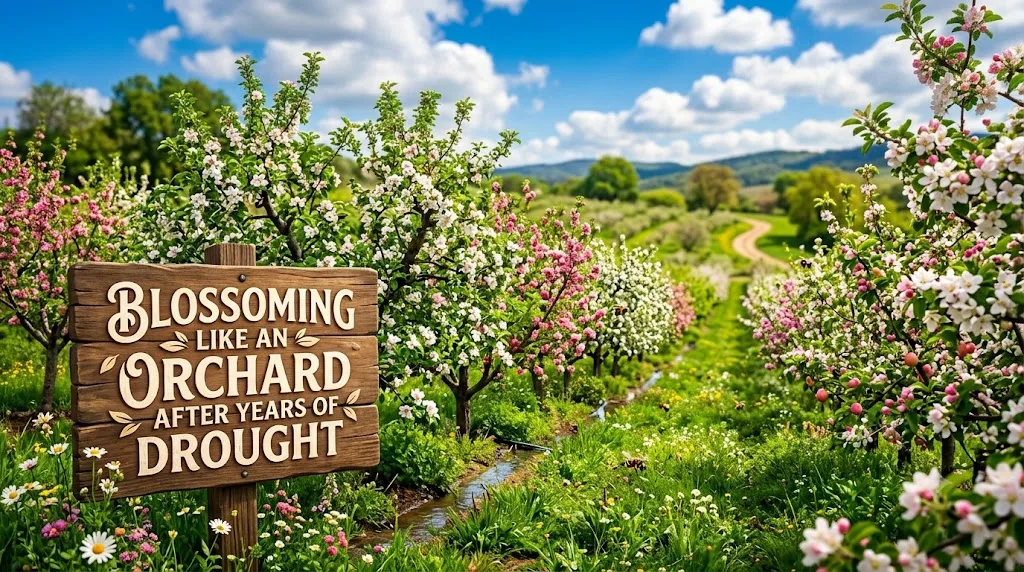
15. “Blossoming like an orchard after years of drought”
Meaning:
This simile represents long-delayed success or joy finally arriving after a lengthy period of hardship or waiting.
Usage insight:
It’s a strong choice for closing chapters or endings, especially in stories built around patience, sacrifice, and eventual reward.
Examples:
- After a decade of setbacks, her career was finally blossoming like an orchard after years of drought.
- The small town felt like it was blossoming like an orchard after years of drought once the new factory brought jobs back.
How to Use Similes Effectively in Writing
A great simile is simple in structure but powerful in effect. Keep these tips in mind across different forms of writing:
- In poems: Let the simile set the emotional tone of the piece, and give it room to breathe rather than stacking several comparisons in one stanza.
- In stories: Use a simile to establish character or atmosphere quickly, especially in opening lines or key introductions, where one strong image can replace paragraphs of exposition.
- In essays: Use similes sparingly and purposefully, mainly to clarify an abstract argument, so the writing still reads as thoughtful and analytical rather than overly decorative.
- In songs: Favor short, rhythmic similes that flow naturally when spoken or sung, avoiding overly long or clause-heavy comparisons.
- In creative descriptions: Pair similes with sensory detail — sound, texture, movement — so the image feels immersive rather than purely ornamental.
Above all, resist the pull of overused comparisons like “quiet as a mouse.” The similes that stay with readers, as shown throughout similes in literature, are the ones that pair a familiar image with a fresh, specific detail, making the comparison feel newly discovered rather than borrowed.
FAQs
1. What are similes in literature, and why are they used so often?
Similes in literature are comparisons using “like” or “as” that help writers turn abstract feelings or ideas into vivid, memorable images, which is why they appear so frequently across poetry, fiction, and classic storytelling.
2. What is the difference between a simile and a metaphor?
A simile compares two things using “like” or “as” (for example, “brave as a lion”), while a metaphor states directly that one thing is another (for example, “he is a lion”). Similes tend to feel gentler and more explanatory, while metaphors feel more immediate and forceful.
3. Why do nature similes appear so often in literature?
Nature offers imagery — growth, storms, seasons, roots, light — that readers across cultures instinctively recognize, which is why nature similes remain one of the richest and most enduring sources of figurative language examples in world literature.
4. Are similes appropriate in academic writing?
Yes, when used carefully. In academic writing, a simile works best when it clarifies a complex or abstract concept for the reader, rather than serving a purely stylistic or emotional purpose.
5. How can a writer create original similes instead of clichés?
Identify the precise quality you want to convey, then choose a natural or everyday image that shares that quality, and add one specific, sensory detail so the comparison feels fresh rather than predictable.
Conclusion
From ancient epics to contemporary novels, similes in literature have always done the same essential work: turning feeling into image, and the abstract into the unforgettable. As these 15 original nature similes show, trees and the natural world offer endless figurative language examples for strength, growth, resilience, wisdom, and human emotion, making them one of the most enduring wells of comparison any writer can draw from. Whether you’re crafting a poem, a novel, an essay, or a song, a well-placed simile brings clarity, imagery, and emotional depth that plain language alone can rarely achieve. So the next time you sit down to write, borrow a page from nature’s own story — its roots, its seasons, its quiet resilience — and let it shape the comparisons that make your writing truly memorable.