
Have you ever wondered why some lines of poetry make a tree feel alive, while others simply compare it to something familiar? That difference often comes down to understanding personification vs simile, two of the most beautiful tools in figurative language. A simile compares two different things using “like” or “as,” helping readers picture one idea through the lens of another. Personification, on the other hand, gives human qualities to non-human things, making a tree seem to “whisper” or a river seem to “weep.”
Both techniques breathe life into writing, but similes work through comparison, while personification works through transformation. Trees are often at the center of these devices because they naturally symbolize strength, growth, resilience, and quiet wisdom that mirrors human experience. When poets compare a person’s patience to a tree’s roots, or describe a tree as “standing guard,” they are tapping into something ancient and emotionally resonant. This article focuses on similes in literature, exploring fifteen original nature similes inspired by trees, while also clarifying how similes differ from personification so you can use both with confidence and precision.
What Is a Simile?
A simile is a figure of speech that compares two unrelated things using the words “like” or “as” to highlight a shared quality between them. This is different from personification, which assigns human behavior or emotion directly to an object without using a comparison word. For example, saying “her calmness was as steady as an old tree in still air” is a simile, while saying “the old tree stood calmly, watching over the field” is personification. Similes make comparisons explicit, helping readers understand abstract ideas by linking them to something concrete and familiar, like the steadiness of a tree. This distinction matters because knowing when to compare versus when to personify can completely change the tone and clarity of your writing.
15 Original Similes That Bring Trees and Nature to Life
1. “Her patience grew as steady as a redwood reaching quietly toward the sky.”
Meaning:
This simile compares patience to the slow, steady growth of a redwood tree, emphasizing quiet persistence over time rather than sudden effort.
Usage Insight:
This works best in reflective poetry or character studies where someone shows calm endurance rather than dramatic action. It suits stories about caregivers, teachers, or long personal journeys.
Example Sentences:
Through every setback, her patience grew as steady as a redwood reaching quietly toward the sky. He never rushed his students, his patience growing as steady as a redwood reaching quietly toward the sky.
2. “His determination held firm like an oak trunk resisting a relentless storm.”
Meaning:
This simile links unwavering determination to an oak tree’s thick trunk, which resists strong winds without breaking.
Usage Insight:
Use this comparison in motivational or narrative poetry describing a character facing repeated obstacles. It works particularly well in stories about long struggles rather than short-term challenges.
Example Sentences:
Despite years of setbacks, his determination held firm like an oak trunk resisting a relentless storm. Critics doubted her, but her determination held firm like an oak trunk resisting a relentless storm of judgment.
3. “Her sorrow hung heavy like moss draped over an ancient branch.”
Meaning:
This simile compares deep sadness to hanging moss, suggesting a slow, lingering weight rather than sudden grief.
Usage Insight:
This comparison suits slower, reflective poems about long-term sadness, mourning, or unresolved loss. It’s especially effective in atmospheric or descriptive passages.
Example Sentences:
Years after the loss, her sorrow hung heavy like moss draped over an ancient branch. He carried the memory quietly, his sorrow hanging heavy like moss draped over an ancient branch of his heart.
4. “Their bond stretched like roots beneath a shared forest floor, unseen yet unbroken.”
Meaning:
This simile compares a strong relationship to interconnected tree roots hidden underground, symbolizing invisible but lasting connection.
Usage Insight:
This works beautifully in poems about family, long friendships, or reunions after distance. It emphasizes connection that endures even without visible contact.
Example Sentences:
Though they lived oceans apart, their bond stretched like roots beneath a shared forest floor, unseen yet unbroken. Years of silence couldn’t change it, their bond stretching like roots beneath a shared forest floor.
5. “Her courage rose like a young sapling pushing through cracked stone.”
Meaning:
This simile compares emerging bravery to a small tree forcing its way through difficult, rocky ground, showing strength born from struggle.
Usage Insight:
This comparison fits stories about overcoming adversity, especially for characters facing their first major challenge. It works well in coming-of-age poetry or empowerment pieces.
Example Sentences:
Facing the courtroom alone, her courage rose like a young sapling pushing through cracked stone. Slowly but surely, his courage rose like a young sapling pushing through cracked stone of self-doubt.
6. “His temper flared like dry leaves catching a sudden gust of wind.”
Meaning:
This simile compares a quick burst of anger to dry leaves scattering suddenly in strong wind, capturing rapid, uncontrolled emotion.
Usage Insight:
Use this in dramatic scenes or dialogue-driven poetry where a character’s emotions shift quickly. It’s ideal for depicting impulsive reactions rather than slow-building anger.
Example Sentences:
The moment he heard the accusation, his temper flared like dry leaves catching a sudden gust of wind. Her temper flared like dry leaves catching a sudden gust of wind the instant she felt betrayed.
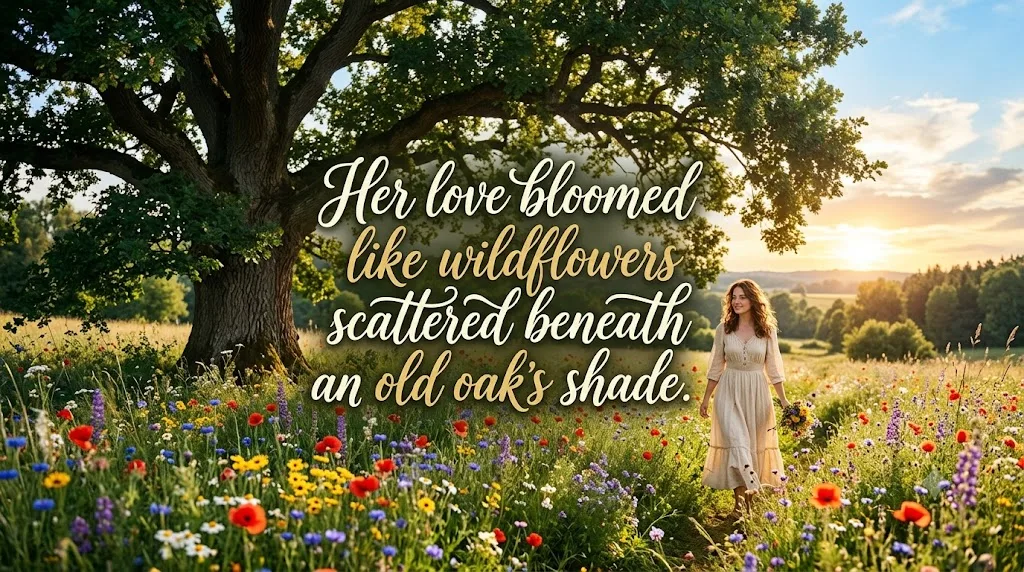
7. “Her love bloomed like wildflowers scattered beneath an old oak’s shade.”
Meaning:
This simile compares the gentle emergence of love to wildflowers growing naturally under a tree’s protective shade, suggesting warmth and unforced beauty.
Usage Insight:
This works well in romantic poetry or storytelling about love that develops gradually and gently rather than suddenly. It suits quiet, tender scenes.
Example Sentences:
Over that summer, her love bloomed like wildflowers scattered beneath an old oak’s shade. Slowly, without either of them noticing, their love bloomed like wildflowers scattered beneath an old oak’s shade.
8. “His silence settled like fog resting between the branches of a winter forest.”
Meaning:
This simile compares heavy, unspoken silence to fog lingering among bare winter branches, evoking mystery and emotional distance.
Usage Insight:
This comparison is effective in introspective poems or scenes involving emotional withdrawal, grief, or unspoken tension between characters.
Example Sentences:
After the argument, his silence settled like fog resting between the branches of a winter forest. No words passed between them, only a silence that settled like fog resting between the branches of a winter forest.
9. “Her wisdom deepened like rings forming slowly inside a growing trunk.”
Meaning:
This simile compares accumulating wisdom to tree rings, which form gradually and mark the passage of time and experience.
Usage Insight:
This suits reflective poetry about aging, mentorship, or life lessons learned over years. It works especially well in tributes to elders or teachers.
Example Sentences:
With every passing year, her wisdom deepened like rings forming slowly inside a growing trunk. Through hardship and joy alike, his wisdom deepened like rings forming slowly inside a growing trunk of experience.
10. “Their unity stood strong like a grove of trees planted close for shelter.”
Meaning:
This simile compares a group’s collective strength to trees planted near one another, offering mutual protection and support.
Usage Insight:
This works well in poems about community, teamwork, or family solidarity, especially in times of hardship. It’s ideal for group tributes or collective resilience themes.
Example Sentences:
During the crisis, their unity stood strong like a grove of trees planted close for shelter. No storm could shake them, their unity standing strong like a grove of trees planted close for shelter.
11. “Her fear trembled like leaves caught in an unexpected breeze.”
Meaning:
This simile compares sudden fear to leaves shaking gently in an unexpected wind, capturing subtle but visible nervousness.
Usage Insight:
This comparison suits quieter emotional moments rather than intense panic, making it ideal for scenes involving anxiety, uncertainty, or first-time experiences.
Example Sentences:
Standing at the podium, her fear trembled like leaves caught in an unexpected breeze. Before the diagnosis was confirmed, his fear trembled like leaves caught in an unexpected breeze of uncertainty.
12. “His resilience bent like a willow branch, yielding but never snapping.”
Meaning:
This simile compares flexible resilience to a willow branch that bends under pressure without breaking, symbolizing adaptability rather than rigid strength.
Usage Insight:
This works well in poems about surviving hardship through adaptability rather than brute strength. It’s particularly effective in stories about emotional recovery or change.
Example Sentences:
Through every hardship, his resilience bent like a willow branch, yielding but never snapping. Life tested her repeatedly, yet her resilience bent like a willow branch, yielding but never snapping under pressure.
13. “Her hope stretched like branches reaching toward a distant patch of sunlight.”
Meaning:
This simile compares hope to tree branches growing toward light, symbolizing a natural, instinctive pull toward better days.
Usage Insight:
This comparison suits poems about recovery, ambition, or optimism during difficult times. It works especially well when paired with imagery of darkness or hardship earlier in the piece.
Example Sentences:
Even during the darkest months, her hope stretched like branches reaching toward a distant patch of sunlight. Through illness and doubt, his hope stretched like branches reaching toward a distant patch of sunlight.
14. “Their heritage ran deep like roots binding generations to the same soil.”
Meaning:
This simile compares family heritage to deep tree roots, symbolizing connection to ancestry, culture, and shared history.
Usage Insight:
This works beautifully in poems about family legacy, tradition, or homecoming. It’s especially powerful in pieces celebrating multigenerational stories.
Example Sentences:
No matter where they traveled, their heritage ran deep like roots binding generations to the same soil. At every family gathering, it was clear their heritage ran deep like roots binding generations to the same soil.
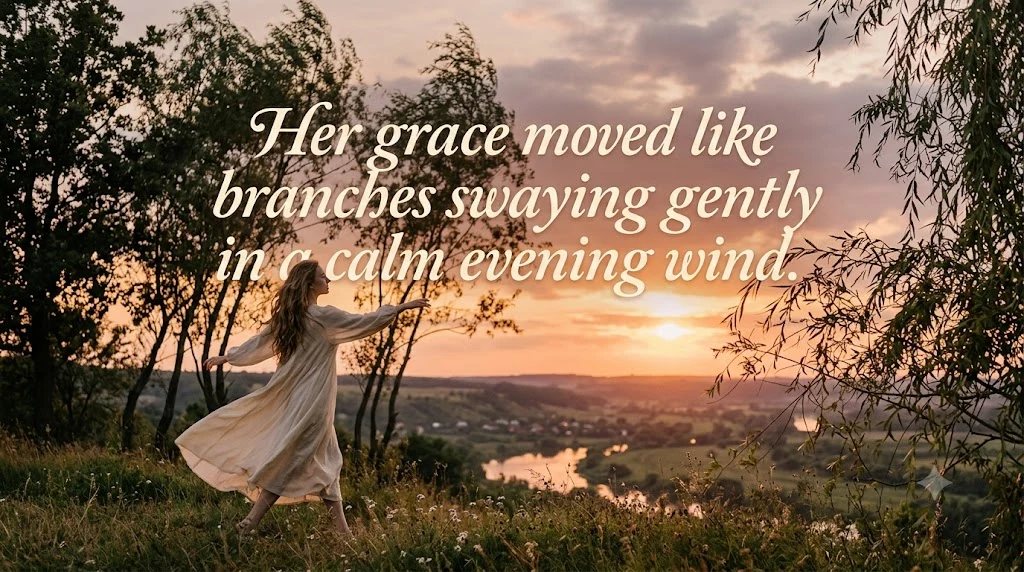
15. “Her grace moved like branches swaying gently in a calm evening wind.”
Meaning:
This simile compares elegance and gentle movement to tree branches swaying softly, evoking calmness, beauty, and effortless motion.
Usage Insight:
This comparison suits descriptive poetry about a person’s presence, movement, or demeanor, particularly in peaceful or tender scenes.
Example Sentences:
As she walked across the room, her grace moved like branches swaying gently in a calm evening wind. Even in grief, her grace moved like branches swaying gently in a calm evening wind, comforting everyone around her.
How to Use Similes Effectively in Writing
Similes are versatile tools, but knowing how and when to use them, especially alongside personification, can elevate your writing significantly. Whether you’re crafting poems, stories, essays, songs, or creative descriptions, these tips will help you use similes with purpose.
Know when to compare versus personify. Use a simile when you want to clarify an idea through comparison, such as “brave as an old oak.” Use personification when you want the object itself to feel alive, such as “the oak stood guard over the valley.” Mixing both intentionally can add richness without confusing your reader.
Match the simile to the emotional tone. A gentle image, like branches swaying in the wind, suits calm or tender scenes, while sudden, sharp comparisons, like leaves catching fire, fit tension or conflict.
Avoid overused comparisons. Common similes like “strong as an ox” can feel flat. Instead, aim for original, tree-based or nature-inspired images that feel fresh while remaining easy to understand.
Prioritize clarity over cleverness. A simile should make an abstract idea easier to grasp, not harder. If a comparison needs lengthy explanation, simplify the image or choose a clearer one.
Use similes sparingly for maximum impact. In poetry and songs, one or two powerful similes per stanza often work better than several scattered throughout. In essays, use similes selectively to emphasize key points.
Test your simile by reading it aloud. Natural-sounding comparisons tend to read smoothly and resonate more deeply with readers than forced or overly complex phrasing.
FAQs
What is the main difference between personification vs simile?
A simile compares two different things using “like” or “as,” while personification gives human qualities directly to non-human things without using a comparison word. For example, “brave as a lion” is a simile, while “the wind whispered through the trees” is personification.
Why are trees commonly used in both similes and personification?
Trees naturally symbolize strength, growth, wisdom, and resilience, making them ideal for comparisons and for embodying human-like qualities such as patience or protection. Their physical characteristics, like deep roots and strong trunks, translate easily into emotional and symbolic meaning.
Can a simile and personification be used together in the same piece of writing?
Yes, many poems and stories combine both techniques to create richer imagery, using a simile for direct comparison and personification for deeper emotional resonance. For example, a poem might compare courage to a standing oak, then personify that same oak as “watching over the land.”
Is one technique more effective than the other in poetry?
Neither technique is inherently better, as each serves a different purpose depending on the tone and message of the writing. Similes are ideal for clear, direct comparisons, while personification works best for creating atmosphere and emotional immersion.
How can beginners practice using similes and personification correctly?
Beginners should start by choosing a single object, like a tree, and writing one simile and one example of personification to compare the difference in effect. Practicing this way helps writers understand exactly how comparison and personification create different emotional impacts in the same piece of writing.
Conclusion
Understanding personification vs simile gives writers two powerful tools to bring language to life, each working differently but toward the same goal of emotional connection. Similes, especially those inspired by nature and trees, allow readers to understand abstract feelings through familiar, grounded comparisons, while personification breathes independent life into the natural world itself. Every simile explored in this article, from roots symbolizing hidden strength to branches reaching toward light, shows how comparison can capture the deepest human experiences using ordinary yet timeless imagery. Similes add clarity, imagery, and emotional depth to language in ways that plain description cannot achieve on its own. As you continue developing your craft, remember that both similes and personification grow strongest when rooted in genuine observation and honest emotion. Just like a tree standing quietly through the seasons, powerful figurative language grows slowly, reaches outward, and leaves a lasting impression on everyone who encounters it.