
Nature has always been humanity’s favorite mirror. When we want to describe a feeling, a person, or a moment, we instinctively reach for the world around us — the sun, the sea, the trees, the wind. Similes about nature let us do exactly that, turning ordinary sentences into vivid, memorable images. A simile is one of the simplest yet most powerful tools of figurative language, and once you understand how it works, you’ll start noticing it everywhere, from poetry to everyday conversation. Trees, in particular, hold a special place in this kind of comparison because they represent so many human experiences at once — strength, growth, resilience, wisdom, and quiet emotion.
A tree bends in the storm but does not break, grows slowly but steadily, and stands as a witness to time itself, which is why writers return to it again and again. Whether you are a student learning about comparisons, a poet searching for imagery, or simply a curious reader, this guide will walk you through what similes are and how to use them well. Along the way, you’ll find fifteen original nature-inspired similes, each explained clearly with real-world examples. By the end, you’ll have a toolkit of comparisons ready to make your own writing richer, clearer, and more emotionally alive.
What Is a Simile?
A simile is a figure of speech that compares two different things using the words “like” or “as,” helping readers understand one idea by connecting it to something familiar. Similes work because they borrow the qualities of something concrete — often drawn from nature — to explain something abstract, like an emotion or a personality trait. For example, saying “her patience was as endless as the ocean” instantly communicates depth and calm without needing a long explanation. This is the essence of figurative language: saying more by saying it differently. Nature similes are especially effective because everyone, regardless of background or language, has some experience with the sun, wind, rivers, and trees, making these comparisons universally understood.
15 Similes About Nature (With Meaning, Usage, and Examples)
1. As Strong as an Oak Tree
Meaning:
This simile describes someone or something with great physical or emotional strength, steadiness, and durability, much like the thick trunk of an oak that has weathered decades of storms.
Usage Insight:
It works best when describing a person’s resilience during hardship or a structure built to last, since the oak tree carries centuries of symbolism tied to endurance and permanence.
Examples:
- Even after losing his job twice, Daniel remained as strong as an oak tree, never once losing his sense of purpose.
- The old stone bridge had stood as strong as an oak tree through a hundred years of floods and harsh winters.
2. As Free as a Bird
Meaning:
This comparison expresses a sense of complete freedom, lightness, and lack of restriction, capturing the effortless way birds move through open sky.
Usage Insight:
Use this simile when writing about liberation, independence, or a joyful release from responsibility, especially in personal essays, songs, or travel writing where emotional openness matters.
Examples:
- After her final exam, Maya walked out of the building feeling as free as a bird, ready to explore the summer ahead.
- Retirement gave Mr. Alvarez a new rhythm to his days, and for the first time in years, he felt as free as a bird.
3. As Deep as the Ocean
Meaning:
This simile conveys profound depth, whether of emotion, knowledge, or character, referencing the ocean’s vast and largely unexplored nature.
Usage Insight:
It suits descriptions of complex emotions like love, grief, or wisdom, and is particularly effective in poetry or reflective essays that explore inner experience rather than surface-level detail.
Examples:
- Their friendship, built over thirty years, was as deep as the ocean and impossible to measure in simple words.
- The professor’s understanding of ancient history seemed as deep as the ocean, with a story ready for every question asked.
4. As Gentle as a Breeze
Meaning:
This phrase describes softness, calmness, and a light, non-threatening presence, drawing from the barely-there touch of a mild wind.
Usage Insight:
Reach for this simile when portraying kindness, tenderness, or a soothing personality, particularly in character descriptions where subtlety matters more than intensity.
Examples:
- Grandma’s voice was as gentle as a breeze, and it always calmed the children before bedtime.
- Despite his large frame, the coach’s encouragement was as gentle as a breeze, never harsh, always reassuring.
5. As Bright as the Sun
Meaning:
This simile highlights radiance, positivity, or an intense, attention-grabbing energy, borrowing the sun’s role as the brightest object in our sky.
Usage Insight:
It works well for describing charismatic personalities, joyful moods, or literal brilliance, and is especially useful in celebratory or uplifting writing such as toasts, tributes, or children’s stories.
Examples:
- Her smile was as bright as the sun, lighting up the room the moment she walked in.
- The new stadium lights were as bright as the sun, making the night game feel like midday.
6. As Calm as a Still Lake
Meaning:
This comparison suggests peacefulness, emotional control, and an undisturbed surface, much like a lake with no wind to stir its water.
Usage Insight:
This simile is ideal for meditation, mindfulness, or crisis-related writing, where you want to emphasize composure in contrast to chaos or pressure.
Examples:
- While everyone else panicked during the storm, the captain stayed as calm as a still lake, giving clear instructions.
- After months of therapy, her mind finally felt as calm as a still lake, no longer racing with worry.
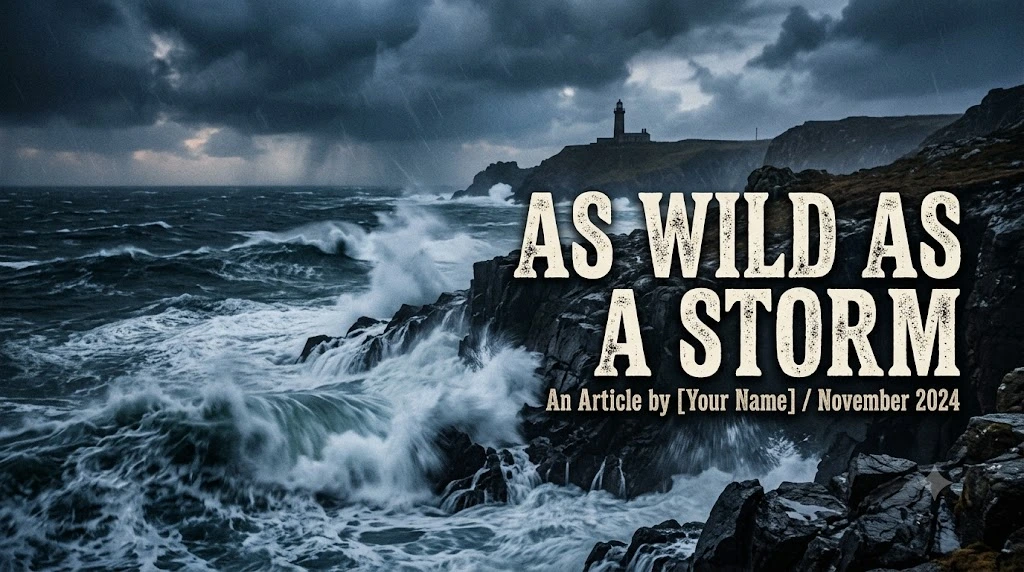
7. As Wild as a Storm
Meaning:
This simile captures unpredictability, intensity, and raw power, referencing the sudden and forceful nature of storms.
Usage Insight:
Use it when describing passionate emotions, chaotic situations, or untamed personalities, particularly in dramatic fiction or emotionally charged scenes.
Examples:
- Their argument grew as wild as a storm, with voices rising over every disagreement from the past year.
- On stage, the guitarist’s energy was as wild as a storm, unpredictable yet completely captivating.
8. As Fragile as a Snowflake
Meaning:
This phrase emphasizes delicacy, uniqueness, and vulnerability, since no two snowflakes are alike and each melts at the slightest warmth.
Usage Insight:
This simile is best suited for describing emotional sensitivity, temporary beauty, or precious moments that require gentle handling, often in poetry or reflective narratives.
Examples:
- Trust, once broken, can feel as fragile as a snowflake, difficult to rebuild once it has melted away.
- The newborn’s tiny fingers looked as fragile as a snowflake, and his parents held him with the utmost care.
9. Like a River Finding Its Way to the Sea
Meaning:
This simile represents persistence, natural direction, and inevitable progress, comparing a life path to a river’s steady, unstoppable journey toward the ocean.
Usage Insight:
It works beautifully in narratives about self-discovery, career growth, or long-term goals, especially when the writer wants to suggest that struggle eventually leads somewhere meaningful.
Examples:
- Her career moved like a river finding its way to the sea, twisting through setbacks but always progressing forward.
- Even in uncertainty, his determination flowed like a river finding its way to the sea, patient but unstoppable.
10. As Silent as the Night
Meaning:
This comparison describes deep quiet, stillness, or secrecy, referencing the hush that settles once darkness falls.
Usage Insight:
This simile suits suspenseful writing, quiet emotional scenes, or moments of solitude, adding atmosphere without needing extra description.
Examples:
- The hallway was as silent as the night, and every footstep echoed louder than she expected.
- He kept his plans as silent as the night, telling no one until the surprise was ready.
11. Like a Flower Blooming in Spring
Meaning:
This simile symbolizes growth, renewal, and the gradual unfolding of potential, much like a flower opening after a long, quiet winter.
Usage Insight:
Use this comparison when writing about personal transformation, confidence building, or new beginnings, particularly in motivational or coming-of-age storytelling.
Examples:
- Since joining the debate club, Sofia has grown like a flower blooming in spring, more confident with every speech.
- The small business struggled for years before finally blooming like a flower in spring, gaining customers overnight.
12. As Vast as the Sky
Meaning:
This simile expresses limitless scale, whether of imagination, ambition, or possibility, drawing from the sky’s endless, boundary-free expanse.
Usage Insight:
It is especially effective when describing dreams, opportunities, or open-ended potential, making it a favorite in inspirational speeches and creative writing about the future.
Examples:
- With a new scholarship in hand, her opportunities suddenly felt as vast as the sky.
- The children’s imagination during story time seemed as vast as the sky, with new worlds invented in minutes.
13. As Unpre dictable as the Weather
Meaning:
This phrase highlights inconsistency and sudden change, referencing how weather can shift from sunshine to rain without warning.
Usage Insight:
Use this simile for characters, markets, or situations that shift quickly, particularly in business writing, character studies, or comedic storytelling that thrives on surprise.
Examples:
- The stock market this year has been as unpredictable as the weather, swinging wildly from one week to the next.
- Working with a toddler is as unpredictable as the weather, one moment laughter, the next moment tears.
14. Like a Mountain Standing Firm
Meaning:
This simile conveys unshakable stability, patience, and quiet strength, comparing steadiness to a mountain that remains unmoved through centuries of wind and weather.
Usage Insight:
It fits best when describing leadership, loyalty, or dependable character, especially in tributes, biographies, or scenes where a person supports others through difficulty.
Examples:
- Through every family crisis, their father stood like a mountain standing firm, calm and reliable no matter what happened.
- The company’s founder remained like a mountain standing firm during the merger, reassuring anxious employees with steady confidence.
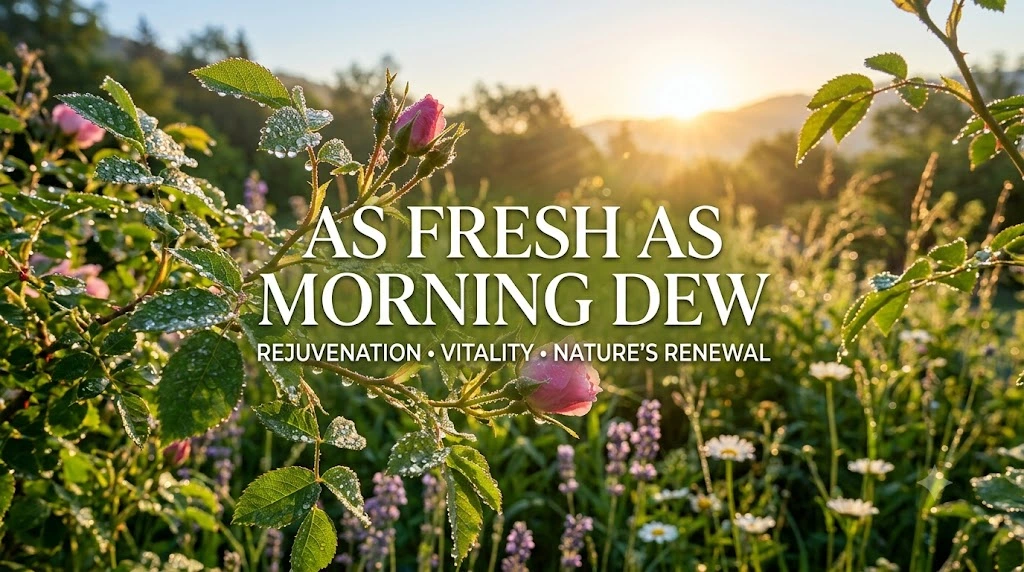
15. As Fresh as Morning Dew
Meaning:
This comparison describes something new, clean, or full of untouched potential, referencing the crisp moisture that appears on grass at dawn before the day begins.
Usage Insight:
This simile works well for describing new starts, youthful energy, or renewed perspective, and is a gentle, uplifting choice for openings, introductions, or reflective writing about change.
Examples:
- Her ideas for the project felt as fresh as morning dew, offering the team a perspective no one had considered.
- Walking into his first day of college, David felt as fresh as morning dew, eager and completely open to what lay ahead.
How to Use Similes Effectively in Writing
Similes are powerful, but only when used with intention rather than as filler. Here are some practical tips for weaving them naturally into different types of writing:
- In poems: Choose similes that match the emotional tone of the poem, and don’t overload a single stanza with more than one or two comparisons, since too many can dilute the imagery instead of strengthening it.
- In stories: Use similes to reveal character or setting quickly, especially during moments where a longer description would slow the pacing, such as first introductions or emotional turning points.
- In essays: Reserve similes for key arguments or reflective passages rather than factual sections, since academic writing benefits from clarity, and comparisons work best when illustrating a nuanced idea.
- In songs: Favor short, rhythmic similes that fit naturally into a lyric’s meter, since singable comparisons tend to be simple, sensory, and easy to repeat in a chorus.
- In creative descriptions: Pair similes with sensory detail — sound, texture, temperature — so the comparison feels immersive rather than decorative, helping readers experience the scene rather than just read about it.
As a general rule, a simile should clarify an idea, not complicate it. If a comparison requires further explanation to make sense, it’s usually better to simplify or replace it with something more familiar.
Frequently Asked Questions
What are similes about nature?
Similes about nature are comparisons that use elements like trees, oceans, wind, mountains, or weather to describe people, emotions, or situations, using the connecting words “like” or “as.”
What is the difference between a simile and a metaphor?
A simile compares two things using “like” or “as” (for example, “brave as a lion”), while a metaphor states that one thing is another without using those connecting words (for example, “he is a lion in battle”). Both are forms of figurative language, but similes make the comparison explicit, while metaphors state it directly.
Why are nature similes so common in literature?
Nature similes are common because natural elements are universally recognizable, emotionally resonant, and rich in symbolism, allowing writers across cultures and time periods to communicate complex feelings through familiar, shared imagery.
Can similes be used in academic writing?
Yes, similes can be used in academic writing, but sparingly and purposefully, typically to clarify a complex concept or add a memorable touch to an introduction or conclusion, rather than throughout the entire piece.
How can I come up with my own original similes?
Start by identifying the core quality you want to describe — such as strength, patience, or unpredictability — and then think of a natural object or phenomenon that embodies that same quality in an unexpected or fresh way, rather than relying on the most obvious, overused comparison.
Conclusion
Similes about nature do something that plain description often cannot: they let readers feel an idea rather than simply understand it. By borrowing the strength of an oak, the calm of a still lake, or the freedom of a bird in flight, writers create images that linger long after the sentence ends. This is the quiet power of figurative language — it turns abstract emotions into something readers can almost touch, see, or hear. Trees, rivers, storms, and skies aren’t just backdrops; they are mirrors for the human experience, offering endless material for comparison because they’ve shaped how we think about resilience, growth, and change for as long as language has existed. Whether you’re crafting a poem, writing a story, or simply trying to describe a feeling more vividly, nature will always offer a comparison worth reaching for. The fifteen similes in this guide are a starting point — but the real magic happens when you begin noticing nature’s rhythms for yourself and finding your own words to match them.