Similes are one of the most beautiful tools in language. They help us compare one thing to another using simple words like “as” or “like,” making ideas clearer and more vivid. When we use similes, we turn ordinary sentences into colorful expressions that readers can easily imagine. They are an essential part of figurative language because they create strong mental pictures and emotional connections.
Just like a gentle drizzle can change the mood of a day, similes can transform plain writing into something memorable. Nature, especially trees, often inspires similes because trees symbolize strength, growth, and resilience. A tree can stand firm in storms, just as people endure challenges in life. It also represents wisdom, patience, and deep human emotions, making it a perfect source for meaningful comparisons.
What Is a Simile?
A simile is a figure of speech that compares two different things using the words “like” or “as.”
Example:
Her voice was as soft as drizzle falling on leaves.
This comparison helps the reader imagine a gentle, calming sound.
1. Drizzle Drizzle Meaning Like a Whisper Through Trees
Meaning:
Something soft, gentle, and barely noticeable.
Usage Insight:
Works best when describing quiet emotions or subtle actions.
Examples:
- The rain fell like a whisper through trees, calming everyone around.
- Her words drifted like drizzle, soft and comforting.
2. Like Drizzle on Dry Soil
Meaning:
Something refreshing and much needed.
Usage Insight:
Ideal for expressing relief or emotional comfort.
Examples:
- His kindness felt like drizzle on dry soil after a long hardship.
- The good news came like gentle rain to her tired heart.
3. As Light as Drizzle on Leaves
Meaning:
Very soft and delicate.
Usage Insight:
Perfect for describing gentle movements or sounds.
Examples:
- Her footsteps were as light as drizzle on leaves.
- The music floated as softly as rain in a quiet forest.
4. Like Drizzle in Early Morning
Meaning:
Calm, peaceful, and fresh.
Usage Insight:
Great for setting a serene mood.
Examples:
- The village looked peaceful like drizzle in early morning.
- His smile felt fresh and pure like morning rain.
5. As Steady as a Drizzle
Meaning:
Consistent and calm over time.
Usage Insight:
Useful when describing patience or persistence.
Examples:
- Her efforts were as steady as a drizzle that never stopped.
- Success came slowly but surely like a gentle rain.
6. Like Drizzle Through Branches
Meaning:
Something flowing naturally and smoothly.
Usage Insight:
Works well for storytelling or poetic writing.
Examples:
- The story unfolded like drizzle through branches.
- His thoughts moved softly, like rain finding its path.
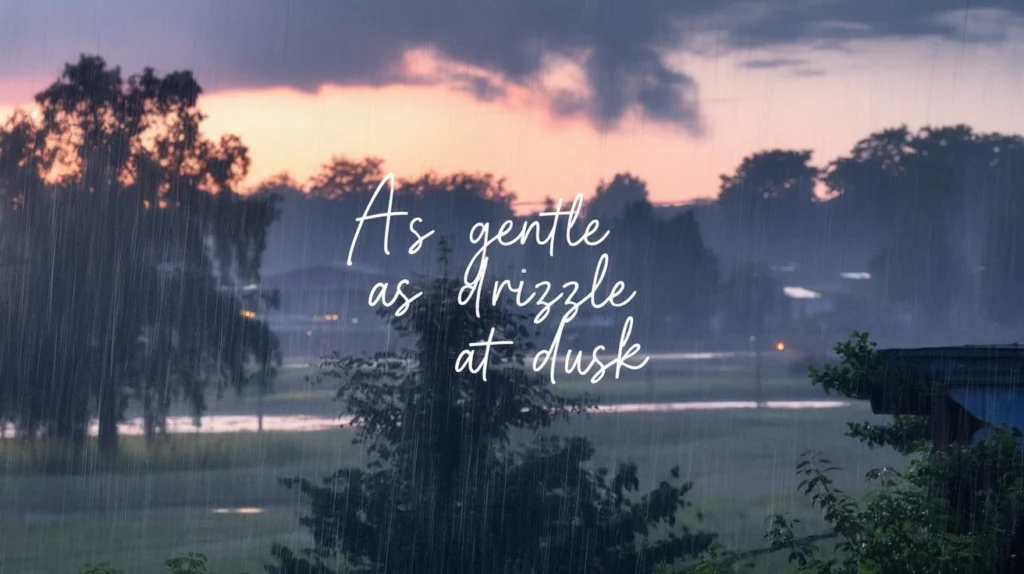
7. As Gentle as Drizzle at Dusk
Meaning:
Calm and soothing.
Usage Insight:
Ideal for emotional or romantic descriptions.
Examples:
- Her voice was as gentle as drizzle at dusk.
- The evening felt calm and peaceful like soft rain.
8. Like Drizzle on a Quiet Lake
Meaning:
Subtle but visible impact.
Usage Insight:
Best for describing small changes with noticeable effects.
Examples:
- His words spread like drizzle on a quiet lake.
- The news created ripples in her thoughts.
9. As Calm as Drizzle Before a Storm
Meaning:
Peaceful but with tension underneath.
Usage Insight:
Useful in storytelling or suspense.
Examples:
- The room felt as calm as drizzle before a storm.
- Silence hung in the air, hiding something deeper.
10. Like Drizzle Nourishing Roots
Meaning:
Quietly helping growth or improvement.
Usage Insight:
Perfect for describing slow development.
Examples:
- Her advice worked like drizzle nourishing roots.
- Small habits grew into success over time.
11. As Soft as Drizzle on Skin
Meaning:
Very gentle and comforting.
Usage Insight:
Ideal for sensory descriptions.
Examples:
- The breeze felt as soft as drizzle on skin.
- His touch was calming and warm.
12. Like Drizzle in a Silent Forest
Meaning:
Peaceful and slightly mysterious.
Usage Insight:
Great for descriptive and atmospheric writing.
Examples:
- The place felt quiet like drizzle in a forest.
- Her presence was calm yet intriguing.
13. As Quiet as Drizzle at Night
Meaning:
Extremely silent and soothing.
Usage Insight:
Best for nighttime or reflective scenes.
Examples:
- The house was as quiet as drizzle at night.
- He sat in silence, lost in thought.
14. Like Drizzle Fading Away
Meaning:
Gradually disappearing.
Usage Insight:
Useful for endings or emotional transitions.
Examples:
- Her sadness faded like drizzle fading away.
- The sound slowly disappeared into silence.
15. As Refreshing as Drizzle After Heat

Meaning:
Bringing relief and comfort.
Usage Insight:
Ideal for positive emotional shifts.
Examples:
- The cool breeze felt as refreshing as drizzle after heat.
- His support brought peace to her mind.
How to Use Similes Effectively in Writing
To use similes well, keep them simple and natural. Choose comparisons that your readers can easily understand and imagine. In poems, similes add rhythm and emotion, making lines more memorable. In stories, they help create strong visuals and deepen characters’ feelings. For essays, use similes carefully to explain complex ideas in a clear way. In songs, similes bring emotion and creativity, making lyrics more powerful. Always avoid overusing them, as too many comparisons can confuse the reader. The best similes feel effortless, like they belong naturally in the sentence.
FAQs
1. What does “drizzle drizzle meaning” refer to?
It often represents something gentle, soft, or calming, commonly used in similes to describe quiet emotions or subtle actions.
2. What is the difference between a simile and a metaphor?
A simile uses “like” or “as” to compare, while a metaphor directly states that one thing is another.
3. Why are similes important in writing?
They make descriptions clearer, more vivid, and emotionally engaging.
4. Can similes be used in academic writing?
Yes, but they should be used carefully to maintain clarity and professionalism.
5. How do similes improve creative writing?
They add imagery, emotion, and depth, making writing more engaging and memorable.
Conclusion
Understanding the drizzle drizzle meaning through similes opens a new world of expressive writing. These gentle comparisons help us describe emotions, scenes, and experiences with clarity and beauty. Like a soft rain nourishing the earth, similes enrich language by adding depth and imagery. Whether you are writing poetry, stories, or essays, using similes thoughtfully can transform your work into something powerful and unforgettable. Keep your comparisons simple, meaningful, and natural, and your writing will flow as smoothly as drizzle through trees.