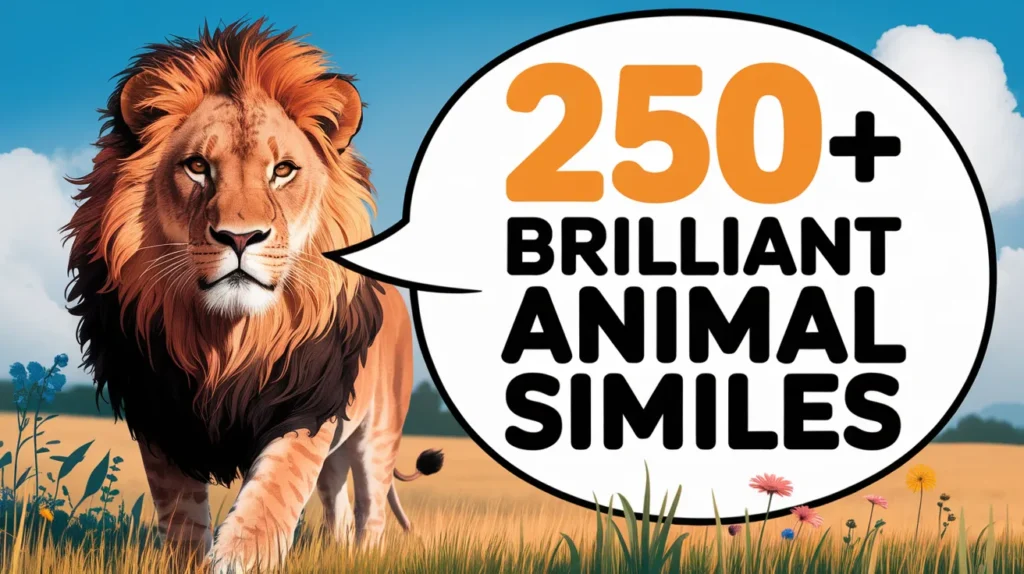
Similes are one of the simplest yet most powerful tools in the English language, allowing writers to paint vivid pictures using everyday comparisons. They work by directly comparing one thing to another using words like as or like, helping readers connect unfamiliar feelings to familiar images. Figurative language such as similes matters because it transforms plain description into something readers can see, feel, and remember. Among all the sources of comparison in language, animals hold a special place, since humans have observed and admired them for thousands of years.
Animals naturally symbolize strength, freedom, wisdom, loyalty, and resilience, making them ideal subjects for rich and relatable comparisons. A lion instantly brings courage to mind, while a mouse quietly suggests timidity, and these shared cultural associations make animal similes instantly understandable. Writers, poets, and songwriters continue to rely on animal similes because they carry emotional weight without needing lengthy explanation. This article explores fifteen original animal similes, explains their meaning, and shows exactly how to use them naturally in your own writing.
What Is a Simile?
A simile is a figure of speech that compares two different things using the words as or like, helping readers understand one concept by relating it to another familiar one. For example, the sentence her courage was as fierce as a lion instantly communicates bravery by borrowing the powerful image of a lion, making the description far more memorable than simply saying she was brave.
Brave as a Lion
Meaning:
This simile describes someone who shows exceptional courage, confidence, and fearlessness, especially in the face of danger or difficulty.
Usage insight:
Writers often use this comparison in stories or speeches to highlight a character’s bravery during a critical or high-pressure moment, since the lion is universally recognized as a symbol of power and courage.
- Despite the storm raging outside, the young captain stood as brave as a lion, guiding her crew safely to shore.
- He walked into the interview room brave as a lion, ready to answer every difficult question with confidence.
Sly as a Fox
Meaning:
This simile refers to someone who is clever, cunning, and skilled at getting what they want, often through subtle or crafty methods.
Usage insight:
This comparison works well when describing a character who solves problems creatively or manipulates situations to their advantage, adding a touch of mystery or wit to the narrative.
- The negotiator was sly as a fox, quietly steering the conversation toward a deal that benefited everyone involved.
- She smiled sly as a fox, already three steps ahead of her opponents in the chess match.
Busy as a Bee
Meaning:
This simile describes someone who is constantly active, hardworking, and fully occupied with tasks throughout the day.
Usage insight:
This phrase fits naturally in descriptions of daily routines, workplaces, or seasons like harvest time, effectively conveying energy and productivity without sounding repetitive.
- During the holiday season, the small bakery was busy as a bee, filling orders from morning until night.
- My mother has always been busy as a bee, managing the household while running her own small business.
Wise as an Owl
Meaning:
This simile refers to someone who possesses deep knowledge, sound judgment, and thoughtful understanding, often gained through age or experience.
Usage insight:
This comparison works beautifully when introducing mentors, elders, or advisors in a story, instantly signaling to readers that the character offers valuable guidance.
- The old professor was wise as an owl, offering advice that students remembered long after graduation.
- Grandfather sat quietly at the table, wise as an owl, listening carefully before sharing his gentle opinion.
Graceful as a Swan
Meaning:
This simile describes someone who moves with elegance, poise, and effortless beauty, often in a calm and controlled manner.
Usage insight:
This phrase suits descriptions of dancers, athletes, or anyone performing delicate movements, since it emphasizes fluidity and refined physical control.
- The ballerina glided across the stage graceful as a swan, capturing the audience’s attention with every step.
- Even under pressure, she handled the difficult situation graceful as a swan, never losing her composure.
Strong as an Ox
Meaning:
This simile refers to someone who possesses remarkable physical strength, endurance, or the ability to handle heavy burdens without complaint.
Usage insight:
This comparison is ideal for describing laborers, athletes, or characters facing demanding physical challenges, reinforcing themes of resilience and raw power.
- After years of farm work, his arms grew strong as an ox, capable of lifting loads others could not manage.
- The rescue worker remained strong as an ox throughout the long night, carrying supplies without ever slowing down.
Quiet as a Mouse
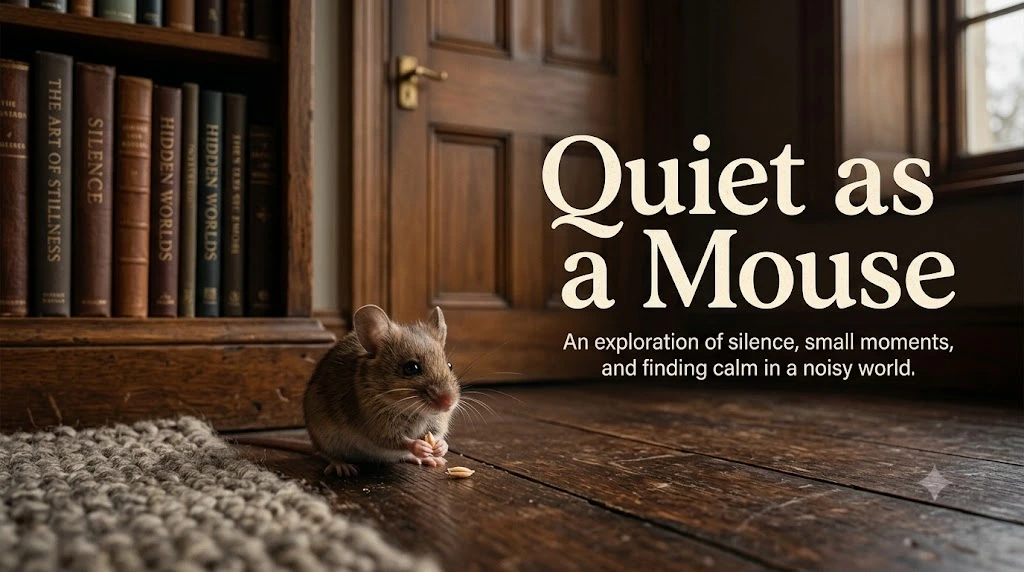
Meaning:
This simile describes someone or something that is extremely silent, gentle, or unnoticeable, often moving carefully to avoid attention.
Usage insight:
This phrase works well in suspenseful or tender scenes, helping readers feel the tension or delicacy of a quiet moment without lengthy description.
- The children crept downstairs quiet as a mouse, hoping to catch a glimpse of the surprise waiting for them.
- She entered the hospital room quiet as a mouse, careful not to wake her sleeping grandmother.
Free as a Bird
Meaning:
This simile expresses a sense of complete freedom, independence, and liberation from restrictions or responsibilities.
Usage insight:
This comparison fits perfectly in moments of emotional release, travel, or personal growth, allowing writers to convey a feeling of lightness and possibility.
- After finishing her final exam, she felt free as a bird, ready to spend the summer exploring new places.
- Once the heavy project ended, he walked out of the office feeling free as a bird for the first time in months.
Stubborn as a Mule
Meaning:
This simile describes someone who is extremely determined, inflexible, or unwilling to change their opinion or behavior, even when facing resistance.
Usage insight:
This phrase suits characters who refuse to compromise, adding depth to conflicts or comedic tension within a story or dialogue.
- No matter how many times we explained the plan, he remained stubborn as a mule and refused to listen.
- My younger sister can be stubborn as a mule, insisting on doing everything her own way.
Proud as a Peacock
Meaning:
This simile refers to someone who displays excessive confidence, pride, or a strong desire to be admired by others.
Usage insight:
This comparison works well in descriptions involving achievement, appearance, or self-satisfaction, often adding a light touch of humor or irony.
- He walked into the reunion proud as a peacock, eager to share news of his recent promotion.
- After winning the championship, the team strutted off the field proud as a peacock, celebrating their hard-earned victory.
Gentle as a Lamb
Meaning:
This simile describes someone who is calm, kind, mild-mannered, and non-threatening in nature or behavior.
Usage insight:
This phrase is especially useful when softening a character’s introduction, particularly one who might otherwise appear intimidating at first glance.
- Despite his large frame, the boxer was gentle as a lamb whenever he spoke with young fans.
- The new teacher seemed strict at first, but she turned out to be gentle as a lamb with her students.
Fast as a Cheetah
Meaning:
This simile emphasizes remarkable speed, quickness, or the ability to move or react faster than expected.
Usage insight:
This comparison suits action scenes, sports writing, or urgent moments where pace and urgency need to be felt immediately by the reader.
- The sprinter shot off the starting line fast as a cheetah, leaving the competition far behind.
- News of the discovery spread fast as a cheetah across the entire research community.
Loyal as a Dog
Meaning:
This simile describes someone who remains faithful, devoted, and dependable, especially through difficult or uncertain times.
Usage insight:
This phrase adds emotional depth to friendships, partnerships, or family relationships, reinforcing trust and unwavering support.
- Through every setback, his best friend remained loyal as a dog, never once considering giving up on him.
- The assistant proved loyal as a dog, staying by her employer’s side through years of both success and struggle.
Curious as a Cat
Meaning:
This simile refers to someone who is naturally inquisitive, eager to explore, and driven by a strong desire to learn or investigate.
Usage insight:
This comparison fits well for characters who ask questions, explore new environments, or drive the plot forward through discovery.
- The young scientist was curious as a cat, constantly asking questions that pushed the research further.
- My nephew is curious as a cat, opening every drawer and closet whenever he visits our home.
Playful as a Dolphin

Meaning:
This simile describes someone who is lighthearted, joyful, and full of energy, often bringing fun and laughter into everyday situations.
Usage insight:
This phrase works beautifully in descriptions involving children, celebrations, or warm-hearted characters who lighten the mood of a scene.
- The toddlers splashed through the pool playful as a dolphin, filling the backyard with laughter.
- Even during stressful deadlines, she remained playful as a dolphin, keeping the entire office smiling.
How to Use Similes Effectively in Writing
Similes become truly powerful when they feel natural rather than forced, so it helps to choose comparisons that match the tone and emotion of your writing. In poems, similes work best when they evoke sensory detail, helping readers see, hear, or feel an image rather than simply understand it intellectually. In short stories and novels, similes should reveal character or advance mood, rather than existing purely as decoration disconnected from the plot. Essays benefit from similes that clarify complex ideas, turning abstract concepts into relatable, everyday images that readers can grasp instantly. Songwriters often rely on similes to create emotional resonance within a limited number of words, making word choice especially important. Across all forms of writing, it helps to avoid overused comparisons and instead craft fresh, original similes that surprise and engage the reader. Finally, always read your writing aloud, since a strong simile should flow naturally within a sentence rather than feel awkwardly inserted.
FAQs
What are animal similes?
Animal similes are comparisons that use the qualities of animals, such as strength, speed, or wisdom, to describe human traits, behaviors, or emotions in a vivid and relatable way.
What is the difference between a simile and a metaphor?
A simile compares two things using the words as or like, while a metaphor states that one thing is another without using comparison words, making metaphors slightly more direct and immersive.
Why are animal similes so commonly used in literature?
Animal similes are common because animals carry widely recognized symbolic meanings, allowing writers to communicate complex traits quickly without lengthy explanation.
Can similes be used in academic writing?
Yes, similes can enhance academic writing by clarifying complex ideas, though they should be used sparingly and appropriately to maintain a formal and objective tone.
How can beginners start writing better similes?
Beginners should start by observing everyday objects and animals closely, then practice connecting those observations to emotions or actions in simple, honest sentences.
Conclusion
Animal similes remain one of the most effective tools for adding clarity, imagery, and emotional depth to language, transforming ordinary descriptions into vivid, memorable moments. By borrowing the strength of a lion, the wisdom of an owl, or the loyalty of a dog, writers give readers an instant emotional connection that plain words often struggle to achieve. Whether you are writing poetry, fiction, essays, or song lyrics, animal similes offer a timeless bridge between human experience and the natural world. With thoughtful practice, these comparisons can elevate your writing, making it more expressive, relatable, and unforgettable for every reader who encounters it.