Words have the power to paint pictures in a reader’s mind, and few tools do this better than the simile. A simile takes something ordinary and makes it vivid by comparing it to something familiar, usually using “like” or “as.” This kind of figurative language helps writers explain emotions, personality, and everyday chaos without long, clunky explanations, and when a simile is funny, it does something even better: it makes the reader smile while they understand. Among all the sources writers borrow from, nature offers some of the richest material, and trees are one of the most powerful symbols in this tradition.
A tree can represent strength, since it holds firm through wind and storm, and it can represent growth, resilience, and wisdom, since it starts small, survives hardship, and stands for generations. Trees also carry deep human emotion, reminding us of quiet endurance and slow, steady change, which is why nature-based comparisons, funny or serious, feel so instantly relatable. This article blends that same spirit of imagery with humor, offering fifteen original funny similes you can use to add personality, wit, and warmth to your writing.
What Is a Simile?
A simile is a figure of speech that compares two different things using the words “like” or “as,” highlighting a shared quality between them to create a clearer or more vivid image. For example, saying someone is “as busy as a one-armed paperhanger” instantly communicates frantic, overwhelmed energy without needing a lengthy description. This is the essence of simile: taking a familiar, often funny image and using it to illuminate something less visible, like a person’s mood, habit, or personality quirk.
Below are fifteen original funny similes, each with a clear meaning, insight into when to use it, and two natural example sentences to show it in action.
As Graceful as a Giraffe on Ice Skates
Meaning:
This simile describes someone who is clumsy or awkward in their movements, especially when trying to appear elegant or coordinated.
Usage Insight:
Use this comparison in lighthearted scenes involving physical mishaps, such as dancing, sports, or first attempts at a new skill, where the humor comes from the gap between effort and result.
- Trying to waltz at his cousin’s wedding, Dave was as graceful as a giraffe on ice skates, apologizing to three different partners.
- The new intern approached the coffee machine as graceful as a giraffe on ice skates, somehow spilling more than he poured.
As Subtle as a Fire Alarm at a Library
Meaning:
This phrase describes something loud, obvious, or impossible to ignore, especially when quiet discretion would have been more appropriate.
Usage Insight:
This simile works well when describing a character’s blunt announcement, embarrassing entrance, or lack of tact, particularly in comedic dialogue or workplace humor.
- His attempt to whisper the surprise party plans was as subtle as a fire alarm at a library, and the whole office heard within minutes.
- She broke the news of her promotion as subtle as a fire alarm at a library, complete with confetti and a microphone.
As Useful as a Screen Door on a Submarine
Meaning:
This simile describes something completely pointless or ineffective for its intended purpose.
Usage Insight:
Use this comparison to poke fun at outdated tools, bad advice, or unhelpful plans, particularly in satire, workplace comedy, or casual conversational writing.
- The instruction manual was as useful as a screen door on a submarine, full of diagrams that matched nothing in the box.
- His excuse for being late was as useful as a screen door on a submarine, convincing absolutely no one in the room.
As Calm as a Cat in a Room Full of Rocking Chairs
Meaning:
This phrase humorously describes someone who is anxious, jumpy, or on edge, using the ironic image of a famously nervous animal surrounded by unpredictable movement.
Usage Insight:
This simile suits scenes of comedic tension, where a character tries to appear relaxed but clearly isn’t, making it perfect for sitcom-style writing or humorous narration.
- Waiting for his exam results, Leo was as calm as a cat in a room full of rocking chairs, jumping at every notification sound.
- She claimed to be fine before the interview, but she was as calm as a cat in a room full of rocking chairs the entire morning.
As Confident as a Toddler With a Permanent Marker
Meaning:
This simile describes someone who acts with bold, reckless confidence despite an obvious lack of skill or awareness of consequences.
Usage Insight:
Use this phrase for characters who dive into tasks headfirst without a plan, adding comedic irony to scenes involving overconfidence or minor disaster.
- He rewired the lamp himself, as confident as a toddler with a permanent marker, and somehow the whole circuit went dark.
- The new hire redesigned the entire spreadsheet as confident as a toddler with a permanent marker, deleting three months of data in the process.
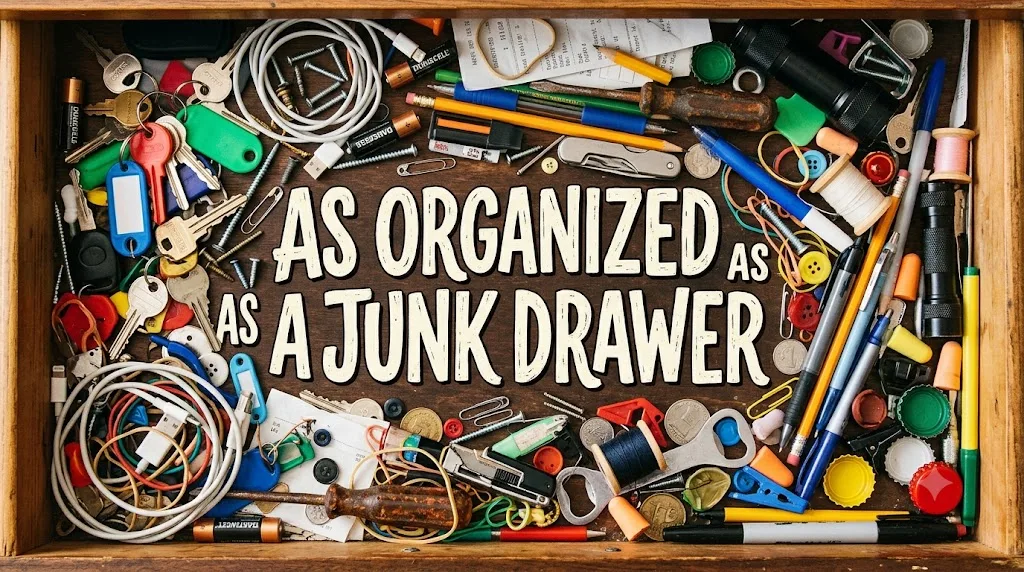
As Organized as a Junk Drawer
Meaning:
This phrase describes something chaotic, cluttered, or lacking any clear structure, much like the miscellaneous drawer found in most kitchens.
Usage Insight:
This simile is ideal for describing messy desks, disorganized plans, or scattered thoughts, and works especially well in humorous personal essays or casual blog writing.
- My notes for the presentation were as organized as a junk drawer, with sticky notes from three different projects mixed together.
- His travel itinerary was as organized as a junk drawer, listing museum hours next to someone’s old grocery list.
As Quiet as a Toddler With a New Drum
Meaning:
This simile ironically describes something extremely loud and disruptive, using the image of a child gleefully banging a brand-new instrument.
Usage Insight:
Use this phrase when describing chaotic, noisy environments, especially in family scenes, classroom humor, or descriptions of overly enthusiastic pets or children.
- The neighbor’s renovation crew was as quiet as a toddler with a new drum, starting demolition at seven in the morning.
- Our office printer was as quiet as a toddler with a new drum, rattling through every single page of the report.
As Busy as a One-Armed Paperhanger
Meaning:
This classic simile describes someone who is extremely overwhelmed with tasks, juggling far more responsibilities than seems humanly possible.
Usage Insight:
This phrase fits well in workplace comedy, parenting stories, or any narrative about a character stretched thin, adding a touch of exaggerated sympathy to the humor.
- During finals week, Priya was as busy as a one-armed paperhanger, bouncing between five study groups and two part-time shifts.
- The restaurant manager looked as busy as a one-armed paperhanger on Saturday night, seating tables while also answering the phone.
As Awkward as a Penguin at a Pool Party
Meaning:
This simile describes someone who feels out of place or physically uncomfortable in a social setting, despite technically belonging there.
Usage Insight:
Use this comparison for characters navigating social anxiety, new environments, or unfamiliar situations, particularly in coming-of-age stories or workplace icebreaker scenes.
- On his first day at the gym, Marcus felt as awkward as a penguin at a pool party, unsure which machine to approach first.
- She stood near the snack table all evening, as awkward as a penguin at a pool party, avoiding every attempt at small talk.
As Predictable as a Soap Opera Plot Twist
Meaning:
This phrase describes something so obvious or overused that it can be anticipated well before it happens.
Usage Insight:
This simile works nicely in reviews, satire, or narrative commentary, especially when critiquing formulaic storytelling, predictable arguments, or overly familiar excuses.
- The villain’s sudden change of heart was as predictable as a soap opera plot twist, arriving right on cue in the final act.
- His excuse for missing the meeting was as predictable as a soap opera plot twist, blaming traffic for the third week in a row.
As Nervous as a Cat at a Dog Show
Meaning:
This simile describes intense nervousness or feeling completely out of one’s element in an unfamiliar or intimidating environment.
Usage Insight:
Use this phrase for scenes involving job interviews, public speaking, or first days somewhere new, where the humor comes from an obvious mismatch between the character and their surroundings.
- Waiting outside the boardroom, Tom was as nervous as a cat at a dog show, straightening his tie for the tenth time.
- The rookie pitcher looked as nervous as a cat at a dog show before his first game in front of a sold-out stadium.
As Slow as a Snail on a Coffee Break
Meaning:
This phrase humorously exaggerates sluggishness, describing something moving far slower than expected, especially when speed was needed.
Usage Insight:
This simile suits scenes involving slow service, procrastination, or sluggish technology, and adds a light, comedic touch to otherwise mundane frustrations.
- The website’s loading speed was as slow as a snail on a coffee break, testing everyone’s patience during the sale.
- His progress on the report was as slow as a snail on a coffee break, with barely a paragraph written by lunchtime.
As Out of Place as a Snowman at the Beach
Meaning:
This simile describes someone or something completely mismatched with its surroundings, standing out in an obvious and often amusing way.
Usage Insight:
Use this phrase for fish-out-of-water scenarios, culture clashes, or scenes where a character’s style or attitude clashes with the environment around them.
- Wearing a full suit to the beach barbecue, he looked as out of place as a snowman at the beach.
- Her formal, old-fashioned vocabulary made her sound as out of place as a snowman at the beach during the casual team meeting.
As Loud as a Rooster With a Megaphone
Meaning:
This phrase describes someone or something extremely loud, especially at inconvenient or early moments.
Usage Insight:
This simile fits humorous scenes involving early mornings, overexcited announcements, or characters who simply cannot lower their volume, adding comedic emphasis without heavy description.
- My little brother woke the whole house up, as loud as a rooster with a megaphone, announcing his video game high score.
- The coach’s pep talk before the game was as loud as a rooster with a megaphone, rattling the locker room windows.
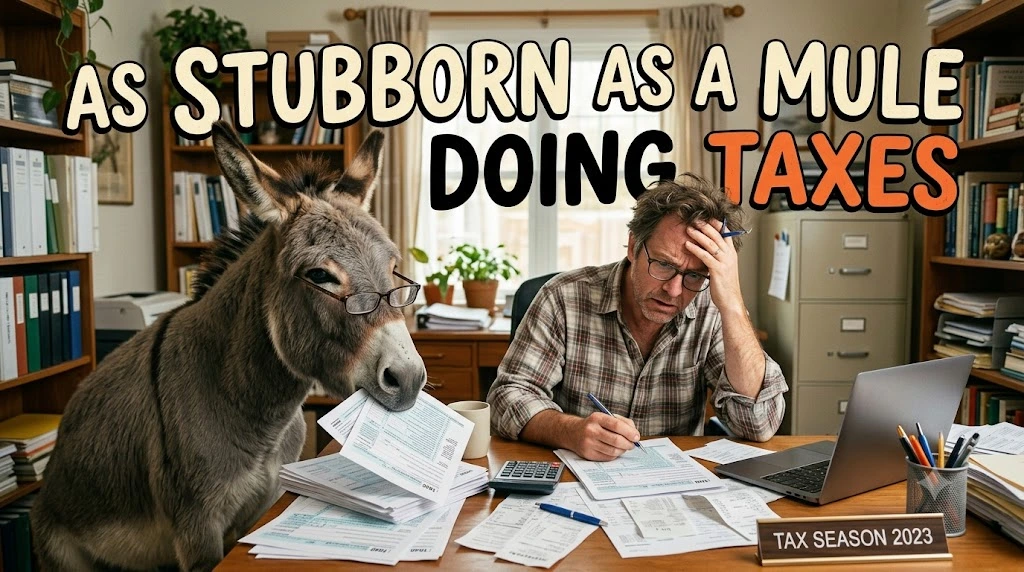
As Stubborn as a Mule Doing Taxes
Meaning:
This simile humorously exaggerates extreme stubbornness, pairing the already famous obstinance of a mule with the frustrating, resistant nature of tax season.
Usage Insight:
Use this comparison for characters who refuse to change their minds or adapt their methods, especially in scenes involving arguments, negotiations, or outdated habits played for comic effect.
- My grandfather is as stubborn as a mule doing taxes, still insisting on writing checks instead of using his banking app.
- The committee chairman was as stubborn as a mule doing taxes, rejecting every new proposal without reading past the first page.
How to Use Similes Effectively in Writing
Similes are simple to write but easy to overuse, so a little strategy goes a long way toward making them land well, especially when humor is involved.
In poems: Choose similes that carry emotional or comedic weight and sound natural when read aloud. A single well-placed funny simile often lands harder than several stacked together, since surprise is part of what makes it work.
In stories: Match the simile to the character’s voice and the story’s tone. A witty, sarcastic character might reach for exaggerated comparisons like the ones above, while a gentler narrator might prefer softer, nature-based imagery instead.
Instead of always writing “as X as Y,” try placing the comparison mid-sentence or at the end for a punchier, more natural rhythm.
Across all of these forms, the golden rule stays the same: a good simile, funny or otherwise, should clarify an image or feeling instantly, so always ask whether the comparison makes the sentence easier to picture and more enjoyable to read.
FAQs
What is a simile in simple words?
A simile is a comparison between two different things using “like” or “as,” used to make writing more vivid, relatable, or entertaining, such as saying someone is “as busy as a one-armed paperhanger.”
What makes a simile funny?
A funny simile usually works by comparing something ordinary to an unexpected, exaggerated, or ironic image, creating humor through the surprising gap between the two things being compared.
What is the difference between a simile and a metaphor?
A simile compares two things using “like” or “as,” while a metaphor states that one thing is another without using those words, so “as stubborn as a mule” is a simile, while “he is a mule” is a metaphor.
Can funny similes be used in professional or academic writing?
Yes, but sparingly, since a well-placed humorous simile can make a presentation, blog post, or informal report more memorable, while overuse can undermine a formal or academic tone.
How many similes should a piece of writing include?
There is no fixed number, but most effective writing uses similes selectively, placing them at meaningful or comedic moments rather than in every sentence, so each comparison keeps its impact.
Conclusion
Funny similes give language personality, warmth, and instant relatability that plain description often cannot achieve on its own, turning everyday frustrations and quirks into moments readers actually enjoy. Whether you are describing someone as graceful as a giraffe on ice skates, as busy as a one-armed paperhanger, or as stubborn as a mule doing taxes, these comparisons connect ordinary feelings to images readers can immediately picture and laugh at. Using humorous similes thoughtfully, rather than excessively, is what separates writing that merely informs from writing that truly entertains. As you continue developing your craft in poems, stories, essays, or songs, let these playful comparisons add clarity, imagery, and emotional depth to your words, helping them stick in your reader’s memory long after the page is turned.