Curiosity is one of the oldest and most human of instincts, and few phrases capture it better than the timeless saying that inquiring minds want to know. Similes give that instinct a voice, turning an abstract pull toward answers into something readers can picture, feel, and remember. A simile compares two unlike things using like or as, and in doing so, it borrows the power of one image to explain another, making figurative language one of the most effective tools a writer has. Figurative language matters because plain statements inform, but comparisons move people, letting a reader experience curiosity rather than simply read the word.
Trees, in particular, offer some of the richest imagery in nature, standing as symbols of strength, patient growth, resilience through storms, quiet wisdom, and even the branching, ever-reaching shape of human thought. A curious mind, much like a tree, grows slowly, sends roots in unexpected directions, and stretches toward the light of new understanding. This connection between nature and inquiry makes tree and nature similes especially powerful when writing about wonder, questions, and the desire to learn. Below are fifteen original similes inspired by inquiring minds and the natural world, each one built to add clarity, imagery, and emotional depth to your writing.
What Is a Simile?
A simile is a figure of speech that compares two different things using like or as, helping readers visualize an idea more vividly than a plain description ever could. For example, saying “her curiosity spread like roots beneath the soil” instantly conveys something patient, quiet, and far-reaching — an image no literal sentence like “she became very curious” could capture on its own. By borrowing the emotional and visual weight of nature, similes turn abstract feelings into something readers can almost touch.
1. Curious as a Crow Circling a Shiny Object
Meaning:
This simile describes an intense, almost irresistible pull toward something intriguing or unexplained, often with a hint of playful obsession.
Usage Insight:
It works best when describing a character who can’t let go of a mystery or detail, especially in lighthearted or investigative scenes. The image adds personality and a touch of humor without losing sincerity.
Examples:
- She was curious as a crow circling a shiny object, unable to stop asking questions about the locked drawer in her grandmother’s desk.
- The reporter grew curious as a crow circling a shiny object the moment the mayor avoided the question entirely.
2. Questions Sprouted Like Seeds After Spring Rain
Meaning:
This simile captures the sudden, rapid emergence of many questions at once, often following new information or an unexpected discovery.
Usage Insight:
Use it when a single event or revelation triggers a flood of curiosity, particularly in scenes involving discovery, confusion, or a turning point in understanding. It suggests growth that feels natural rather than forced.
Examples:
- Questions sprouted like seeds after spring rain the moment the professor mentioned the missing chapter of the manuscript.
- In the children’s minds, questions sprouted like seeds after spring rain as they watched the strange lights move across the sky.
3. Curiosity Spread Like Roots Beneath the Soil
Meaning:
This simile suggests curiosity that grows quietly and steadily, unseen at first, but gradually reaching further than anyone expected.
Usage Insight:
It’s ideal for describing slow-building interest or long-term fascination, especially in reflective or literary writing where curiosity develops over time rather than all at once. It works well in character studies and coming-of-age narratives.
Examples:
- Her curiosity spread like roots beneath the soil throughout that quiet summer, until she had read every book in her father’s library.
- His fascination with the stars spread like roots beneath the soil, shaping the direction of his entire career years later.
4. Wonder Bloomed Like a Flower Turning Toward the Sun
Meaning:
This simile describes wonder or interest opening up gradually, in a way that feels natural, hopeful, and drawn toward something illuminating.
Usage Insight:
Use it for moments of gentle inspiration or awakening interest, especially when a character is drawn toward knowledge, beauty, or a new perspective. It adds warmth and optimism to a scene.
Examples:
- Her wonder bloomed like a flower turning toward the sun the first time she looked through a telescope.
- As the lecture continued, his wonder bloomed like a flower turning toward the sun, and he leaned forward to catch every word.
5. Curious as a Fox Sniffing at a Locked Door
Meaning:
This simile conveys sharp, alert curiosity focused on something deliberately hidden or forbidden, often paired with cleverness or patience.
Usage Insight:
It works well in mystery, suspense, or investigative writing, where a character senses that something important is being concealed. The image adds intelligence and tension to the description.
Examples:
- He was curious as a fox sniffing at a locked door, certain the old house held secrets no one wanted to discuss.
- She grew curious as a fox sniffing at a locked door whenever her colleagues lowered their voices near the manager’s office.
6. Her Mind Wandered Like a River Seeking the Sea
Meaning:
This simile describes thoughts that drift naturally from one idea to another, following curiosity toward some larger, unseen destination.
Usage Insight:
Use it in reflective, poetic, or introspective passages, especially when a character’s thinking feels unhurried but purposeful. It suits internal monologue and quiet, contemplative scenes.
Examples:
- During the long train ride, her mind wandered like a river seeking the sea, moving from memory to memory without effort.
- His questions wandered like a river seeking the sea, always circling back to the same unanswered mystery.
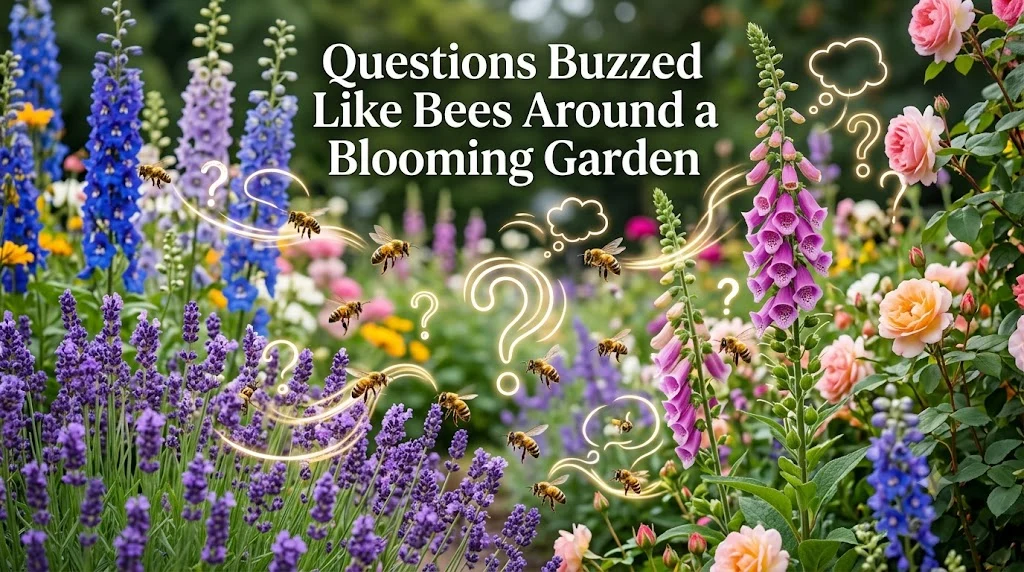
7. Questions Buzzed Like Bees Around a Blooming Garden
Meaning:
This simile suggests an active, energetic swarm of curiosity, with many questions competing for attention at once.
Usage Insight:
It’s effective in classroom scenes, group discussions, or moments of shared excitement, where curiosity feels collective rather than individual. The image brings liveliness and motion to dialogue-heavy passages.
Examples:
- Questions buzzed like bees around a blooming garden the moment the scientist announced her discovery to the press.
- In the crowded auditorium, questions buzzed like bees around a blooming garden, and the speaker could barely finish a sentence.
8. Curiosity Climbed Like Ivy Up an Old Stone Wall
Meaning:
This simile represents curiosity that grows steadily and persistently, finding its way into every corner of a subject or situation.
Usage Insight:
Use it to describe determined, thorough investigation, especially when a character refuses to let a topic go until every detail is uncovered. It works well in detective fiction and long-form journalism-style narration.
Examples:
- Her curiosity climbed like ivy up an old stone wall, covering every possible angle of the unsolved case.
- Once he started researching his family history, his curiosity climbed like ivy up an old stone wall, reaching branches he never expected to find.
9. His Interest Flickered Like a Candle in a Draft
Meaning:
This simile describes curiosity that rises and dims unpredictably, present but fragile, easily disturbed by distraction or doubt.
Usage Insight:
It suits characters with wavering commitment or attention, particularly in scenes where interest is real but unstable. It adds subtlety and realism to emotional descriptions.
Examples:
- His interest flickered like a candle in a draft throughout the meeting, sparked briefly whenever the topic touched on something personal.
- Her enthusiasm for the project flickered like a candle in a draft, strong one day and nearly gone the next.
10. Curious as an Owl Turning Toward Every Sound
Meaning:
This simile suggests heightened alertness and attentiveness, a mind quick to notice and investigate anything unusual.
Usage Insight:
Use it for perceptive, observant characters, especially in tense or atmospheric scenes where small details matter. It works well in mystery and thriller writing.
Examples:
- She was curious as an owl turning toward every sound, catching details in the room that everyone else had missed.
- He grew curious as an owl turning toward every sound the moment the floorboards creaked upstairs.
11. Her Thoughts Branched Like an Old Oak Reaching for Light
Meaning:
This simile describes ideas expanding in multiple directions at once, much like a tree’s limbs stretching outward in search of sunlight.
Usage Insight:
It’s especially effective when describing complex thinking, brainstorming, or intellectual growth over time, and pairs naturally with themes of wisdom and maturity. It works well in essays and reflective narration.
Examples:
- Her thoughts branched like an old oak reaching for light, connecting ideas from history, science, and memory all at once.
- As the discussion deepened, his questions branched like an old oak reaching for light, touching subjects no one had planned to cover.
12. Questions Rippled Like Stones Dropped in a Still Pond
Meaning:
This simile captures how a single question can spread outward, triggering more questions and reactions far beyond its original point.
Usage Insight:
Use it when one small detail sets off a larger chain of curiosity or consequence, especially in mystery or drama writing. It emphasizes cause and effect in a visually satisfying way.
Examples:
- Her question rippled like a stone dropped in a still pond, unsettling assumptions no one in the room had thought to challenge.
- The journalist’s single question rippled like a stone dropped in a still pond, reshaping the entire investigation that followed.
13. Curiosity Burned Like a Fire Craving More Wood
Meaning:
This simile describes intense, almost consuming curiosity that grows stronger the more it is fed, refusing to settle for partial answers.
Usage Insight:
It works well for passionate, driven characters, especially in stories about ambition, obsession, or scientific pursuit. Use it sparingly for maximum impact, since its intensity can overwhelm a quieter scene.
Examples:
- His curiosity burned like a fire craving more wood, and one discovery only led him to search for three more.
- Her need to understand the experiment burned like a fire craving more wood, keeping her in the lab long after everyone else had gone home.
14. His Mind Opened Like a Flower at First Light
Meaning:
This simile suggests a gentle, gradual awakening of curiosity or understanding, often tied to a peaceful or hopeful realization.
Usage Insight:
Use it for quiet, meaningful moments of insight, particularly in emotional or philosophical writing where clarity arrives softly rather than suddenly. It brings a calm, reflective tone to the page.
Examples:
- His mind opened like a flower at first light the moment he finally understood his mentor’s advice.
- Sitting alone by the window, her mind opened like a flower at first light, and the answer she had searched for finally felt clear.
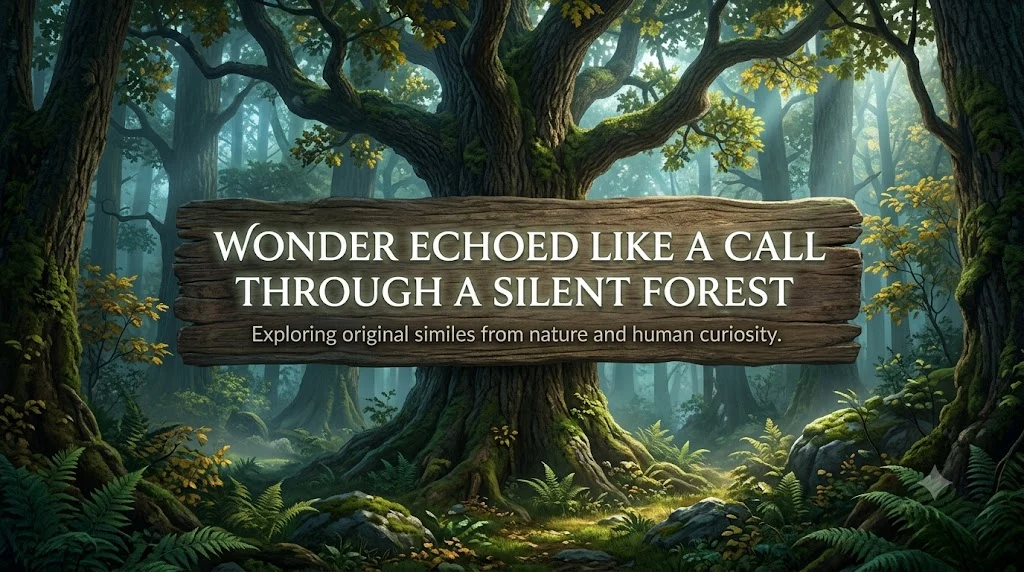
15. Wonder Echoed Like a Call Through a Silent Forest
Meaning:
This simile describes a feeling of wonder that lingers and resonates, continuing to affect someone long after the original moment has passed.
Usage Insight:
It works well as a closing or reflective image, particularly in poetry or personal essays where you want curiosity to feel lasting rather than momentary. It pairs powerfully with themes of memory and meaning.
Examples:
- Even years later, that childhood question echoed like a call through a silent forest, shaping every choice she made afterward.
- His teacher’s words echoed like a call through a silent forest, sparking a curiosity that never truly faded.
How to Use Similes Effectively in Writing
Similes are most powerful when chosen with intention, not scattered in as decoration. Here are practical guidelines for using them well across different forms of writing:
- In poems: Let a single strong simile carry the emotional core of a stanza, rather than layering several comparisons on top of each other.
- In stories: Use similes to reveal how a character feels about curiosity or discovery, not just to describe what is happening around them.
- In essays: Keep similes purposeful and clear, especially in analytical or persuasive writing, where a well-placed comparison can simplify a complex idea without distracting from your argument.
- In songs: Prioritize rhythm and natural phrasing, since similes in lyrics need to sound effortless when sung, not just read silently.
- In everyday creative writing: Avoid overused comparisons like “curious as a cat” and instead reach for fresh, specific imagery — the fifteen similes above are a strong starting point for original, memorable language.
As a general rule, one vivid, well-placed simile will always leave a stronger impression than several vague ones crowded into the same paragraph.
FAQs
1. What does “inquiring minds want to know” mean?
This popular phrase refers to a natural, often playful curiosity about details, gossip, or information that people are eager to uncover, and it’s frequently used to introduce a question in a lighthearted or attention-grabbing way.
2. What is the difference between a simile and a metaphor? A simile compares two things using like or as (“her curiosity spread like roots beneath the soil”), while a metaphor states that one thing is another without those connecting words (“her curiosity was a river”). Similes tend to feel more descriptive and gentle, while metaphors feel more direct and immediate.
3. Why are nature similes so effective for describing curiosity?
Nature similes work well because readers already associate certain natural images — roots, rivers, flowers, fire — with specific qualities like patience, persistence, or intensity, making abstract feelings like curiosity easy to visualize and understand.
4. Can similes be used effectively in academic writing?
Yes, when used sparingly and with precision. A well-chosen simile can clarify a complex idea for readers, but academic writing benefits most when similes support the argument rather than replace clear, direct explanation.
5. How many similes should a piece of writing include?
There’s no strict rule, but fewer, more original similes almost always outperform many generic ones. A handful of carefully chosen comparisons will leave a stronger impression than an overloaded paragraph of imagery.
Conclusion
Similes built around curiosity and the timeless idea that inquiring minds want to know do something few other techniques can achieve: they turn an internal, invisible feeling into something readers can see and feel for themselves. By borrowing the patient growth of roots, the reach of an old oak, and the quiet blooming of a flower toward light, these comparisons give curiosity a shape, a rhythm, and a heartbeat. Trees and nature have always mirrored the human mind’s hunger to grow, question, and understand, and when writers lean into that connection, their language gains both clarity and emotional depth. Whether you’re writing a poem, a story, an essay, or a song, the right simile doesn’t just describe curiosity — it invites the reader to feel it stirring in themselves.